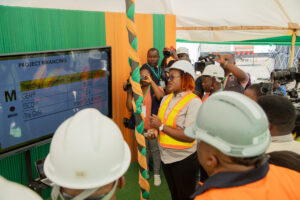
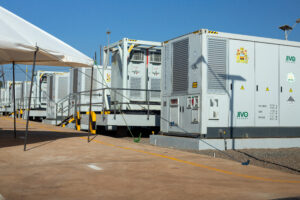
The Global Energy Alliance for People and Planet, in partnership with Malawi’s Ministry of Energy and the Electricity Supply Corporation of Malawi, ESCOM, has commissioned a 20 MW/40 MWh Battery Energy Storage System at Kanengo in Lilongwe, introducing utility-scale battery storage into the country’s national electricity system.
The facility was commissioned on July 24, 2026, at an event presided over by Malawi’s Minister of Energy, Dr Jean Chifuniro Mathanga, and attended by ESCOM Chief Executive Officer Eng. William Kayipa, Global Energy Alliance Vice President for Africa Carol Koech, development partners and other government and energy-sector officials.
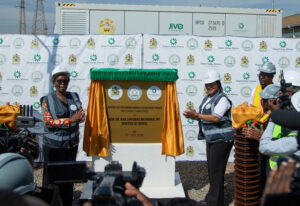
The project is backed by US$20 million in catalytic grant financing from the Global Energy Alliance, with ESCOM implementing the facility.
The Alliance and the Government of Malawi launched construction of the project in November 2024, making it the Alliance’s first battery energy storage investment in Africa. The Kanengo facility is designed to store electricity and release it when required by the national grid.
The project forms part of the Global Energy Alliance’s Grids of the Future programme, which seeks to support resilient, modern power systems and greater integration of renewable energy.
Speaking during the commissioning ceremony, Dr Mathanga linked the project directly to Malawi’s long-running electricity challenge, noting that the country had been at the mercy of the clock and the weather. She said reliable electricity was essential to the country’s industrialisation ambitions under Malawi 2063, which identifies industrialisation as one of the vehicles for transforming the country into a wealthy, self-reliant and industrialised upper-middle-income nation by 2063.
Mathanga noted that the BESS project was a sustainer of national growth and energy resilience.
She said the battery would help stabilise electricity supply, reduce Malawi’s dependence on costly diesel generation and improve the use of electricity already being produced. Dr. Mathanga further said the facility would provide the steady, high-quality power required by hospitals, schools and businesses while allowing the country to manage electricity demand more effectively.
“Solar power may have sparked our energy revolution, but the battery storage system will sustain it,” Mathanga said.
According to the World Bank, Malawi’s electricity access rate has risen from 11 percent in 2019 to 25.9 percent, with the country now targeting 70 percent access by 2030. The National Energy Compact estimates that reaching the target will require about 1.15 million new on-grid connections and 1.55 million off-grid connections. The expansion of access therefore comes alongside the need for an electricity system capable of supplying the additional consumers.
Malawi’s electricity system remains heavily dependent on hydropower, leaving generation exposed to changes in water availability and other climate-related shocks. The system has also faced instability and a costly reliance on diesel generation, challenges identified by the Global Energy Alliance.
The Alliance said the Kanengo BESS was designed to address some of these constraints by storing electricity and managing fluctuations on the grid.
The problem of unreliable supply is not new. A Malawi Electricity Access Project appraisal document prepared by the World Bank recorded an estimated peak supply shortfall of 135 MW in 2017/18, equivalent to about 40 percent of peak demand, with customers experiencing up to 10 hours of load-shedding a day at the time. ESCOM’s records also show that load-shedding programmes continued to be issued in 2025, including scheduled interruptions in June, August, October and November.
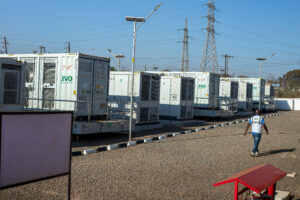
Unlike a conventional power plant, the BESS does not generate electricity. It stores electricity and makes it available to the grid when required, allowing the system to manage changes between electricity generation and demand. The Global Energy Alliance said the Kanengo facility is expected to help stabilise the national grid while supporting the integration of renewable generation.
In a press release dated July 24, the Global Energy Alliance said the facility is expected to help manage fluctuations on the grid and unlock about 100 MW of renewable generation capacity that is currently constrained. The Alliance also estimates that the project could avoid more than 10,000 tonnes of carbon emissions annually. The organisation said the facility would also reduce reliance on diesel generation while improving energy access for households, commercial and industrial sectors and critical public services.
ESCOM Chief Executive Officer William Kayipa said the battery would help stabilise feeder voltages, reduce system losses and make previously constrained renewable generation available. He connected the project to ESCOM’s transformation into a financially viable and high-performing utility capable of supporting Malawi’s target of 70 percent electricity access by 2030. Kayipa said the project was also intended to strengthen the utility’s ability to provide reliable electricity to consumers.
The project is part of the Global Energy Alliance BESS Consortium, a global initiative aimed at scaling battery storage across low- and middle-income countries. The Alliance said the consortium seeks to demonstrate how storage can be deployed to strengthen grid performance and build a pipeline of investable storage assets across emerging markets and developing economies. The Malawi project therefore forms part of the organisation’s wider work on battery storage rather than being treated as a standalone technology installation.
The Global Energy Alliance has also placed the project within its Grids of the Future initiative.
According to the Alliance, the programme uses digitalisation and distributed energy integration to support the development of resilient and future-ready power systems. The organisation said the approach treats storage as part of core grid infrastructure while supporting more flexible power systems and the modernisation of electricity markets.
Carol Koech, Vice President for Africa at the Global Energy Alliance, said the project demonstrated what could be achieved when governments, financiers and development partners align around a shared vision.
Koech said the facility would provide reliable power for hospitals, schools, businesses and homes while reducing the interruptions, noise, fumes and costs associated with diesel generators. She added that the project could establish a new standard for energy infrastructure in Africa and provide an opportunity for other countries to replicate the approach.
The partnership has also involved changes to Malawi’s regulatory framework. In his commissioning speech, Mathanga commended the Malawi Energy Regulatory Authority, MERA, for developing the regulatory frameworks and tools required to support the BESS initiative, including the integration of BESS provisions within the Grid Code. He also commended the Ministry of Energy for ensuring that Battery Energy Storage Systems were adequately reflected within national policies.
Mathanga said the regulatory work demonstrated Malawi’s ability to adapt its policies and frameworks to emerging technologies and investment opportunities. She said the measures were intended to ensure that project developers would not be hindered by the absence of clear policy direction or regulatory guidance. The Minister said Malawi remained committed to creating an enabling environment that supports innovation, attracts investment and accelerates the country’s energy transition and development goals.
The partnership also includes a regional skills-development component. The project anchors the Southern Africa BESS Centre of Excellence at Mzuzu University to support BESS skills development and knowledge sharing across the continent. The initiative is intended to build technical capacity around battery energy storage as Malawi and other African countries develop their electricity systems.
The Global Energy Alliance’s engagement with Malawi also extends beyond the battery installation. In his speech, Mathanga said the Alliance was continuing to support the modernisation of Malawi’s electricity grid, including work addressing ageing infrastructure and strengthening operational visibility, system integration, observability and network planning. He said the partnership should evolve from one project to the next, building on achievements and supporting long-term sustainability in the power sector.
Mathanga also called on the Ministry and other players in the energy sector to focus on reducing the power deficit that has necessitated load-shedding. He acknowledged improvements in the preceding weeks but said more needed to be done to secure stable electricity supply for Malawians.
“Let’s achieve zero-loadshedding, we have suffered enough, we have promised enough, it is time to deliver.” He noted
The Minister said the project should contribute to reduced technical losses, improved operational efficiency and better power quality for consumers. He also linked stable electricity supply to economic growth and described it as a priority for Malawi’s leadership.