
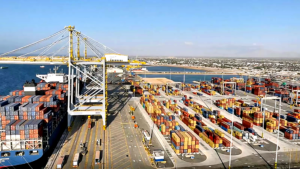
Berbera Port, located on Somaliland’s Gulf of Aden coastline, is becoming an important trade and logistics gateway in the Horn of Africa. Its expansion through a partnership between the Somaliland government and Dubai-based DP World has increased its container-handling capacity, improved shipping efficiency and strengthened its potential to serve landlocked Ethiopia and other regional markets. The development comes at a time when conflicts in the Middle East, competition over maritime routes and growing interest in the Red Sea are reshaping the economic and security interests of countries along its coastline. For Somaliland, Berbera presents an opportunity to turn this strategic location into employment, trade and investment while reducing its vulnerability to external geopolitical pressures.
Investing in infrastructure to strengthen economic resilience
The development of Berbera Port demonstrates how investment in strategic infrastructure can create economic opportunities in a region where access to reliable trade routes remains a major challenge.
The port’s modernisation has involved the construction of a new container terminal, expansion of cargo-handling facilities and the introduction of modern equipment. Its container-handling capacity increased from approximately 150,000 to 500,000 twenty-foot equivalent units (TEUs) annually following the first phase of expansion.
An independent evaluation commissioned by British International Investment (BII), conducted by Itad and Steward Redqueen, provides evidence of the economic contribution of this investment.
According to the December 2025 assessment, the upgraded port and its surrounding economic ecosystem supported approximately 2,490 jobs and generated $45.1 million in economic value in 2024. Of this contribution, an estimated 921 jobs and $16.7 million in economic value were directly attributable to the port expansion.
The distinction is important because not all the economic activity around the port resulted from the investment itself. The assessment accounted for activity that would have existed even without the expansion.
Operational improvements have also produced measurable benefits. Average vessel turnaround time declined from approximately 64 hours in 2018 to 25 hours in 2024, making the port more efficient for shipping operators and cargo owners.
Transport cost reductions for businesses using Berbera were estimated at $8.4 million in 2024. The evaluation also identified environmental benefits associated with improved logistics and reduced vessel waiting times, estimating annual emissions reductions of approximately 7,651 tonnes.
These findings demonstrate that infrastructure investment can contribute to economic development beyond the immediate operation of a port. They also provide an important basis for assessing how similar investments could strengthen trade connectivity in other parts of Africa.
Extending the benefits to local businesses and communities
While the economic contribution of Berbera is measurable, the next challenge is ensuring that its benefits reach a wider section of Somaliland’s population.
The development of the Berbera Economic Zone, located near the port, is intended to complement maritime operations by attracting businesses involved in manufacturing, processing, warehousing and distribution.
This approach creates opportunities to move beyond an economy primarily dependent on cargo handling and shipping services towards a broader commercial ecosystem.
Local businesses could benefit through the supply of goods and services, transport, equipment maintenance, food processing and other activities connected to port operations. Young people could also access employment opportunities through technical training and the development of skills required in logistics and industrial operations.
However, the availability of these opportunities does not automatically guarantee local participation.
The BII assessment identifies economic benefits associated with the port and its surrounding ecosystem, but further attention is needed to understand how these gains are distributed among local enterprises and communities.
Strengthening local supplier networks, improving vocational training and ensuring that smaller businesses can access commercial opportunities would help translate infrastructure investment into more inclusive economic development.
The long-term value of Berbera should therefore be measured not only through cargo volumes and investment figures but also through the businesses it supports and the livelihoods it helps sustain.
Ethiopia and the opportunity for regional trade
Berbera’s geographical position also provides an opportunity to expand economic cooperation with Ethiopia, one of Africa’s largest landlocked economies.
Ethiopia relies heavily on neighbouring countries for access to international maritime trade. Its dependence on the Port of Djibouti has made the search for alternative routes an important economic and strategic priority.
Berbera could offer an additional commercial corridor, particularly for businesses in eastern Ethiopia. The BII evaluation identifies areas where the port could provide cost-competitive access compared with established routes.
However, the full potential of this opportunity remains constrained by political disagreements and the absence of a formal transit agreement between Ethiopia and Somaliland.
The January 2024 memorandum of understanding between the two administrations brought the issue of maritime access into international focus and generated strong opposition from Somalia, which maintains that Somaliland is part of its sovereign territory.
Türkiye subsequently facilitated the December 2024 Ankara Declaration between Ethiopia and Somalia, establishing a framework for negotiations on Ethiopia’s access to the sea under Somalia’s sovereign authority.
These developments demonstrate that the economic potential of regional infrastructure depends partly on diplomatic cooperation.
For Berbera to attract greater volumes of Ethiopian trade, commercial arrangements must be accompanied by reliable transport connections, customs cooperation and an agreed framework for cross-border transit.
Progress in these areas could expand the port’s market, strengthen regional trade and create additional opportunities for businesses on both sides of the corridor.
Managing international partnerships amid Red Sea competition
The growing importance of Berbera has also attracted international attention because of the competing interests surrounding the Red Sea and Gulf of Aden.
The United Arab Emirates has an established commercial interest through DP World’s investment in the port. Israel’s recognition of Somaliland in December 2025 introduced another dimension to the territory’s international relationships, particularly given its proximity to Yemen and the maritime routes connecting the Indian Ocean to the Red Sea.
Meanwhile, Türkiye, Egypt and other regional actors have important political, economic and security interests in the Horn of Africa.
The conflict involving Israel and Iran, together with attacks on commercial shipping associated with the Houthi movement in Yemen, has demonstrated how developments in the Middle East can disrupt international trade and increase the cost of maritime transport.
For Somaliland, the challenge is to maintain constructive relationships with international partners without becoming excessively dependent on any single country or geopolitical bloc.
Economic diversification and diplomatic engagement are important parts of this response. Maintaining relationships with different trading partners, attracting investment across several economic sectors and establishing transparent conditions for foreign partnerships could help protect long-term development interests.
The effectiveness of this approach will depend on the strength of local institutions and their ability to assess investment agreements according to their economic, environmental and security implications.
Transparency and accountability in strategic investments
The experience of Berbera also highlights the importance of institutional accountability in managing international infrastructure partnerships.
Large-scale investments can bring capital, technology, employment and improved services. However, their long-term contribution to development depends on how agreements are negotiated, monitored and implemented.
Transparent investment agreements, independent economic and environmental assessments, parliamentary oversight and public participation can help ensure that strategic infrastructure serves wider public interests.
For Somaliland, strengthening these mechanisms would provide greater confidence to investors while ensuring that the population has a clearer understanding of the benefits and obligations associated with international partnerships.
The objective is not to discourage foreign investment but to ensure that it contributes to sustainable economic development rather than creating excessive dependence on external actors.
Maritime cooperation as a foundation for economic stability
The security of the Red Sea and Gulf of Aden is another important consideration for Somaliland’s economic future.
Disruptions to commercial shipping can increase insurance costs, delay deliveries and affect the competitiveness of ports across the region. These consequences extend beyond countries directly involved in conflicts.
No single coastal territory can independently guarantee the security of such an important international maritime corridor.
Cooperation among regional stakeholders is therefore essential. Information-sharing, maritime surveillance, search-and-rescue capacity and diplomatic engagement could help strengthen responses to threats affecting commercial shipping.
Although political disagreements between countries in the Horn of Africa complicate cooperation, shared economic interests provide an opportunity for dialogue.
Somaliland’s engagement with neighbouring territories and international maritime partners could help advance practical areas of cooperation while protecting the economic infrastructure on which its development ambitions depend.
From strategic location to sustainable development
Berbera Port provides measurable evidence of how investment in strategic infrastructure can strengthen economic opportunities in an African territory exposed to international geopolitical competition.
The reported employment, economic value and transport cost reductions demonstrate the contribution of the port’s development. However, its full potential remains dependent on expanding regional trade, strengthening local business participation and ensuring that economic benefits are distributed more widely.
The next phase for this country, should focus on connecting port development to a broader economic strategy that includes skills development, local enterprise growth, transparent investment management and constructive regional engagement.
The experience also offers lessons for other African countries seeking to develop strategic infrastructure while navigating competing international interests.
Geographical advantages alone do not guarantee economic prosperity. Their value depends on the institutions, partnerships and development strategies through which they are managed.
The opportunity, for Somaliland, is to make Berbera more than a strategic maritime gateway: to develop it into an engine of employment, regional trade and economic resilience, with benefits extending beyond the port to the communities and businesses that depend on it.
Evidence source: The independent Berbera Port impact assessment commissioned by British International Investment and conducted by Itad and Steward Redqueen, December 2025. assets.bii.co.uk


