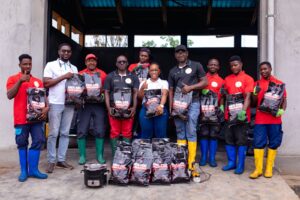
Group photo of the AMIG-COAL team led by its founders in the middle (Left to Right_Felix, Igxtelle & Armstrong) // Photo courtesy
Cameroon produces vast quantities of crop residues and municipal waste each year, much of it unused or burned, worsening deforestation and air pollution.
A 2023 study published in AIMS Energy analysed crop production data from Food and Agriculture Organization Statistics (FAOSTAT) and estimated that the country’s agricultural and municipal waste contains a theoretical energy potential of around 606 Petajoule (PJ) per year, with approximately 96 per cent coming from crop residues. Only a small fraction of this potential is currently harnessed for energy, leaving households dependent on firewood and charcoal.
The environmental consequences are visible. Forests continue to shrink as demand for traditional fuel rises. Smoke from open burning of organic waste contributes to poor air quality in villages and towns. Families struggle to meet basic energy needs, with many spending a significant portion of their income on fuel. At the same time, local waste collection systems remain inadequate, meaning organic and plastic waste often accumulates or is disposed of unsafely.
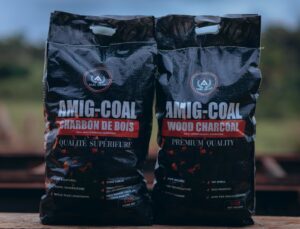
In response to these challenges, a group of young Cameroonian innovators in Zilli, a village in the Centre Region, decided to turn the problem into an opportunity. In 2023, they established AMIG – COAL, a social enterprise that transforms sawmill leftovers and cassava starch into high-quality, clean-burning briquettes.
The initiative provides households with a more affordable and environmentally friendly alternative to charcoal while creating employment and technical training opportunities for local youth and women.
The project’s founders, environmentalist Felix Fomundam and entrepreneurs Igxtelle and Amstrong Dopgima, recognised the urgent need to reduce reliance on traditional fuels and prevent further degradation of forests. They worked closely with sawmill operators in the area and families engaged in small-scale cassava processing, gathering the raw materials needed to begin production. What started as a simple idea soon grew into a structured system, supported by a growing number of young people who were eager to learn new skills and contribute to a cleaner future.
“When we started, most people did not believe that waste could be transformed into something useful, it was a challenge convincing households to switch from charcoal, but over time, they saw the benefits. Every briquette sold felt like a small victory for the environment and for our community.”said Felix Fomundam

Throughout 2023 and early 2024, the team dedicated long hours to testing different approaches to carbonising biomass and compressing it into briquettes that burn steadily and produce minimal smoke. Their determination paid off. The briquettes gained attention for their reliability, affordability and cleaner properties compared to traditional charcoal, encouraging more households to adopt them as a practical alternative.
As demand grew, AMIG – COAL formalised its operations and established a small production site in Zilli. The facility quickly became a centre of activity, drawing in young men and women seeking both employment and training. For many, this opportunity provided more than a livelihood. It offered a sense of direction and the chance to take part in a movement that addressed real environmental and economic challenges facing their community.
“I never imagined I could learn to operate machinery and manage production in my own village. This work has opened doors for me and my friends, and we are proud to contribute to a cleaner, healthier environment while earning a living. It proves that innovation can grow anywhere, even in small communities.”said Moussa Bikoy, one of the members of the team.
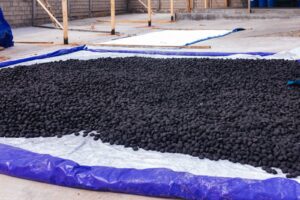
The impact has been steadily felt. Families who once struggled to afford charcoal now spend less on fuel. Women who previously depended on inconsistent income sources now earn from supplying cassava starch. Young technicians who had limited prospects are now gaining hands-on experience in machinery operation, production management and the broader principles of renewable energy. These changes, though gradual, are reshaping daily life in Zilli and surrounding areas.
Beyond household benefits, the initiative is helping restore the environment. Reduced pressure on nearby forests has slowed the pace of degradation. Cleaner cooking solutions are improving indoor air conditions, particularly for women and children who spend long hours near cooking fires. With fewer piles of untreated waste left to rot or burn, local surroundings are gradually becoming healthier and more manageable.
What began as a modest idea in a rural village is now drawing national interest, reflecting a growing recognition that locally driven innovation plays a vital role in addressing Cameroon’s energy and environmental challenges.
The work of these young innovators shows that meaningful change does not always require large infrastructure or foreign investment. Sometimes, it begins with a handful of determined individuals willing to look at waste not as a burden but as a resource waiting to be transformed.