For years, Ms Treeza Auma, a seasoned journalist based in Kilifi County, the coastal parts of Kenya, documented the daily toll of climate change. These were not abstract headlines. Broken families in dilapidated shacks, children scavenging for scraps, and communities collapsing under environmental strain were at the centre of it all.
She witnessed floods sweeping homesteads, droughts turning fertile land to dust, and hunger gripping villages. Climate distress fueled desperation, which in turn amplified social ills such as the abuse of elderly people.
But what broke her the most was the brutal killings and mutilations of elderly men and women accused of witchcraft. Many elders, chased from ancestral homes, became homeless, seeking refuge under trees or in roofless structures.
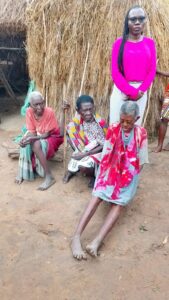
According to BBC reports, elders who are traditionally revered as wisdom-keepers were instead being hunted, with one killed every week along Kenya’s coast. In Kilifi alone, over 138 elders were murdered between 2020 and mid-2022, driven by land disputes, poverty, and superstition, according to Haki Yetu, a human rights organization in Kenya.
Beyond Communal justice
For Auma, these injustices became impossible to ignore. “We could no longer just watch,” she recalls. “Charity wasn’t enough. We needed sustainable solutions that restored both material needs and human dignity.”
In 2023, Auma co-founded Poverty Eradication and Sustainable Action Aid (PESAID), officially registered in April 2024 as a humanitarian Non-Governmental Organization (NGO) under Kenya’s NGO Act.
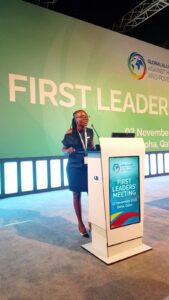
“We founded PESAID after witnessing deep-rooted injustices,” said Auma. “Elderly people were being abused, mutilated, killed, or evicted from their homes. Some were living in deplorable conditions without proper shelter or basic amenities.”
Auma postulated that journalism exposed the interconnectedness of these crises.
The name PESAID itself blends the Swahili word Pesa, meaning money. Aid symbolizes practical and deeper meaning reflecting both material and psychosocial support. Beyond the elderly, Auma repeatedly encountered persons with disabilities (PWDs) living in isolation, especially in Kilifi, where children with disabilities were often hidden by families and denied education. In Magarini, nearly every homestead seemed affected.
“We even raised concerns urging researchers and government officials to investigate what could be happening,” she recalled.
Stigma, neglect, and exclusion created lifelong mental-health challenges. These issues were not new, Auma notes. These challenges permeated the community and were treated as norms. Not a single community-centred solutions existed. That gap became PESAID’s purpose.
Immediately after its formation, PESAID mapped out interventions to restore dignity among the marginalized groups. PESAID co-chaired and spearheaded Kenya’s first steering committee against the elderly killings in Kilifi County, playing a pivotal role in multi-agency awareness and protection efforts. This aimed to counter more than 100 annual witchcraft-related murders reported in coastal and western Kenya.
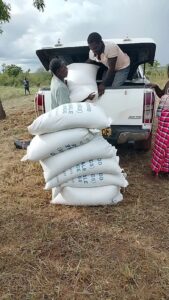
The organization launched the Mudzini Mudzo safe-home at Kaya Godoma in Ganze, which is now a refuge for displaced elders who receive shelter, regular meals, and healthcare. The programme provides dignity, care, and security for society’s outcasts.
The third aspect PESAID initiated was supporting livelihood initiatives among elderly people, such as bee keeping in Siaya County, promoting economic empowerment while addressing climate challenges.
Furthermore, PESAID collaborates with networks like the Kilifi County Disability Network to advocate for inclusivity and accountability.
While the organization began in Kilifi, similar injustices across the country pushed PESAID to expand. PESAID now runs pilot programmes in seven counties namely: Migori, Kisii, Kilifi, Mombasa, Nairobi, Siaya and Kajiado counties.
In Migori, PESAID is campaigning against Female Genital Mutilation (FGM) among the Kuria community, whereas in Kisii and Kilifi, the organzation is focused on combating elderly killings and Persons With Disabilities PWD abuse.
In Siaya, the organization is supporting neglected elderly persons with sustainable projects like bee keeping, while delivering Sexual Reproductive Health and Rights (SRHR) education to youth in slums like Kibera, Mathare, and Kaloleni in Nairobi. PESAID is also working with climate actors on adaptation and resilience in both Mombasa and Kajiado counties.
Faith Ongiri, PESAID’s Programmes Officer, notes that youths from low-income backgrounds lack access to basic SRHR information because most messages are school-based.
“We started outreach programmes targeting out-of-school youth to ensure they too understand their rights, health, and how to protect themselves,” she explains.
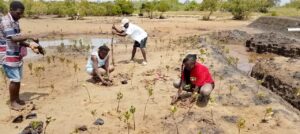
Mental-health support is integrated due to the emotional strain of poverty and stigma. PESAID’s SRHR programmes also run in counties with high adolescent pregnancy and HIV rates. In climate-vulnerable zones, the organization introduces adaptation projects, sustainable farming, and resilience workshops to address floods, droughts, and ecological grief, echoing Sustainable Development Goal (SDG)13.
Faith Ongiri describes PESAID’s approach as holistic. When distributing sanitary kits to adolescent girls, for example, they engage caregivers and siblings to build community awareness.
“We don’t isolate issues; we address them collectively,” she emphasizes.
Unlike organizations that rely solely on aid, PESAID blends care, empowerment and advocacy. They equip communities with skills to generate income, promote self-reliance, and participate in local projects, making interventions sustainable.
Auma’s personal encounters with the suffering of the elderly, Persons With Disabilities (PWDs), and homeless victims of communal brutality fueled her commitment to action.
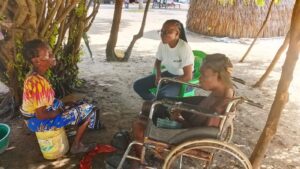
Ongiri adds her own story, filled with emotions but inspiring. “As a mother of a child with disability, I was inspired to advocate for inclusive education. Every time I connect a parent to a therapist or school and see hope return, I know why this work matters,” she stated.
Despite being under two years old and largely unfunded, PESAID’s impact is substantial. The organization has recorded over 100 elderly people who have benefited directly from the Mudzini Mudzo safe-home, accessing regular meals, medical care, and supportive community networks.
Similarly, PWDs in Siaya and Kilifi have begun small income-generating activities such as kitchen gardening.
On SRHR, hundreds of youths have gained SRHR and mental-health knowledge, while hundreds of out-of-school youths have been informed through PESAID’s outreach. PESAID co-chaired the first-ever national steering committee against elderly killings in Kilifi. What began as grassroots visits to vulnerable families in Kilifi has become a multi-county movement addressing poverty’s interconnected crises.
PESAID’s mantra, “More than just help,” reflects its blend of immediate relief, food, shelter, and cash, with long-term tools like skills training, trauma counselling, and community networks. The organization’s reach now covers hotspots across Kisii, Siaya, Migori, Nairobi, and Mombasa.
Despite this expansion, one major challenge remains data tracking. Ongiri admits that inadequate monitoring and documentation have made it hard to showcase its full impact. Strengthening reporting systems and amplifying grassroot stories is a priority. Ongiri also hopes to expand community participation through dialogues and policy forums.
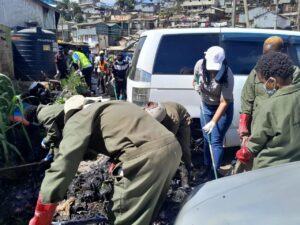
“It’s important that the elderly, youth, and PWDs have their voices heard in decision-making spaces”, stated Ongiri.
Partnerships for greater impact
PESAID recognizes that government, youth, and private-sector collaboration is vital. They work with county officials, schools, churches, and health facilities to align programmes with government development plans. Their partnerships with Youth are central to mobilization, climate action, and SRHR outreach. This bolsters intentionality and innovation.
The private sector has been instrumental in supporting training and market linkages in the community.
PESAID’s programmes align with SDG 3, SDG 5, and Agenda 2063. In under two years, the organization has reached thousands, impacting underserved communities. Their work embodies Africa’s vision of a resilient, inclusive, and prosperous future, where no one is left behind.
By protecting the elderly, uplifting PWDs, equipping youth with knowledge, and fostering climate-resilient livelihoods, PESAID proves that the most powerful revolutions often begin with the people who refuse to look away.
This story was featured in the just-launched Luminate Africa Journal first edition of The Africa Feature Network’s end-year magazine, and can be downloaded on our website at the Journal page.