
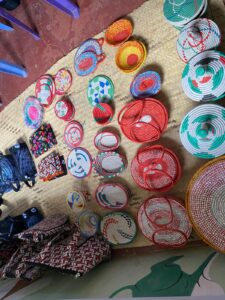
Traditional baskets made from sisal and Mkoma Tree. The baskets lose their original quality due to exposure to dust and extreme temperatures in Kakuma. Photo: Sefu Sabila AFN.
In Kenya, the creative sector contributes 5.6% to the National Gross Domestic Product (GDP), according to the Kenya Bureau of Statistics’ (KNBS) 2024 report. A report by Kenya National Commission for UNESCO (KNATCOM) stated that Kenya’s creative economy is not only a source of jobs but a beacon of innovation and unity.
In 2023, the Ministry of Youth Affairs, Creative Economy and Sports, led the development of a draft for Kenya’s Creative Economy policy, whose goal is to foster sustainable economic growth, innovation and cultural enrichment by leveraging the creative industries. The policy, once finalized and implemented, will support the sector to optimize its capacity and contribute to both social and economic benefits.
According to the United Nations Trade and Development department, the creative economy refers to creating, producing, and distributing goods and services that use creativity and intellectual capital as primary inputs.
In a recent survey in Sub-Saharan Africa, the United Nations Conference on Trade and Development (UNCTAD), noted that the creative industry is a critical area for governments to invest in, as it is filled with culture, with young people incorporating technology, making the industry lucrative, and largely solving the unemployment crisis in the region.
Creative industry, including sectors like arts, entertainment, media, design, and technology are major source of revenue generation and job creation for many African countries. This showed success in Nigeria, where the sector contributed $1.4 billion to the GDP in 2023. According to the National Bureau of Statistics, film production and music accounted for about 82% of the revenue from the creative industries sector.
In the Semi-Arid County of Turkana in Kenya, residents have tapped into the sector, with limited experience, depending on transferred knowledge of bead and basket weaving from generations, seasonal market access, limited government support and technology. Their art has since become their source of income. Making the most out of it, women and youths have infused culture and modernism to make their art timely, without fully eroding their culture.
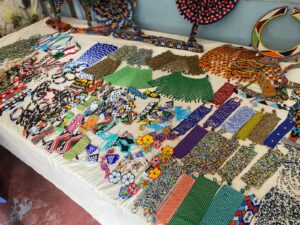
While many took basket weaving and beading as a passive form of leisure, women and many youths have formed groups, bringing creatives from different sectors, who are reaping huge profits from their art.
The beads, baskets and traditional chairs (Ekitolong), are no longer meant for keeping the culture from generation to generation, but exported to foreign countries, with European countries forming their main market.
Turkana are known for their beautiful culture and women gracefully putting on their colourful beads, and carrying their traditional baskets made from Mkoma Tree (Doum Palm). The art has become economical.
Conceptor Kagene chairlady Mrukano Women group in Eliye Turkana Central, majoring in basket making from Doum Palm found at the shores of Lake Turkana, are currently living a better life following the sales, no longer waiting for donations from the government during extreme droughts, as they can buy food.
“Our lives have changed. We are no longer making these pieces for culture but for markets. In our community, everyone is talented, either in making our traditional neckpieces, bracelets or baskets like us. But we decided to make it different, not for culture,” Kagene explained.
Kilometres away in Turkana West, Kalobeyei Women Handicraft Cooperative, a women-led Community Based Organisation (CBO), majoring in beading, basketry and tailoring, has employed not only residents but also refugees.
Sarah Sikatenda, a Congolese national elected by both locals and refugees, is the current chairperson of the cooperation. In an interview with Africa Feature Network, Sikatenda said the initiative has been life-changing both socially, emotionally and economically, in terms of the situation of both communities.
United by unprecedented situations back in their home countries, the workshop acts as a social joint for more than 300 women. Sikatenda says the conversations ease the pain for many who were abused during the conflict in their countries; it is a distraction from home issues and a source of income for many women around.
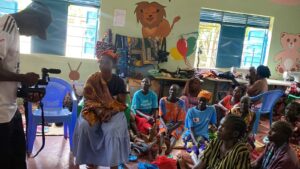
“This is not only economically based; it is like a therapy session for many of us. We are all healing from wounds we cannot tell. Some have been abused, battling domestic violence; coming here and being engaged is not in vain. We have seen results; mothers can feed their families,” she said.
Echoing the sentiments of Kagena and Sikatenda, Tabitha Wanjiru, treasurer of Kalobeyei Women Handicraft Cooperative said that the venture has been successful and improved the living conditions of many families within, despite the saturation of bead makers around.
According to Wanjiru, what is setting them apart is learning the new trends in the market space and beauty industry, which makes their products outstanding and marketable.
Early this year, they received a tender for making 24,000 pieces of beads to be exported to Japan, and another tender from England.
“Everyone around can make beads, making it a challenge to sell them. For your art to be picked, it must bring out what your intent is, the true culture of the Turkana people, or the South Sudanese people in their bead. For even more sales, we have learnt a little modern art and blended with different cultures so as not to lose our identity, but acquiring those shapes is very expensive. People from outside love this, for that we received a huge order from Japan and England this year, which is a key milestone for us,” Sikatenda proudly said.
Kagene says their biggest client are tourists who come to the Eliye Springs, commonly referred to as the ‘White Sands of Egypt’ for holidays, who purchase their baskets in large quantities.
“We do not have a specific market; we often receive high sales when people visit Eliye Springs during holidays, very few orders come from within, but the sales made from the visitors are worth every effort of our 15 members. Our local people often reject our prices; very few often buy our baskets because they believe they can weave,” she said.
Speaking during the handing over of registration certificates to several groups, James Akorot, a senior cooperatives officer in Turkana County Government, lauded the groups for organizing themselves into a legal entity.
“This registration empowers cooperatives to operate within the law, access funding opportunities, and build meaningful partnerships that will uplift local livelihoods. We encourage members to remain united, focused, and accountable,” Akorot said.
With the market a key challenge for many groups, and frustrations during the registration process, Sikatenda said in their small capacity, while waiting to tackle the issues, they have changed lives, created employment opportunities, and trained others who have moved with the skills back to their countries.
Following their order, they opened a small loan scheme to members with a repayment of 10% interest, accommodating the situation of members.
According to Sikatenda, the new aid scheme categorization by the United Nations High Commission for Refugees (UNHCR), has cushioned many members locked out of donations in categories three and four.
“After categorization, a majority of us could not receive aid; other women even left for their countries. Kalobeyei Women Handicraft Cooperation has been able to help many of us. We can pay bills and look after our families and employ many women; all we need is support and market, be it local or international,” she said.
The Refugee Department Services (RAS), commenting on the power of the unexplored sector in the region, said that crime rates have reduced as youths are engaging in creating cultural pieces and receiving small orders, motivating them to produce and market their products.
“Cases of violence and insecurity have reduced within the camp; youths are using their culture to make money. Recently, a group called Amat Arts received an order of $1000 of their drawing pieces. It is paying, all they need is support from the government and also well-wishers to market their arts,” said an officer from RAS.
Kagene believes that their venture, if supported, can improve livelihoods within, as families will be able to buy food from basket sales when they acquire a consistent market. In the current environment, offering others opportunities is halted by payment issues due to a lack of markets.
The two creatives have created opportunities for youths and women in the region, calling for training, knowledge exchange programs, and donation of modern machines to keep up with new trends in the market.
“Young people are taking up these skills to another level, incorporating technology, but our region lacks access to new technological designs for us in beading. We rely on supplies from Nairobi, which is quite expensive. Again, taking up a team for training and exhibitions is beyond our means,” Sikatenda told Africa Feature Network.
Sikatenda further said that due to the inconsistency of the market, most of their products end up losing quality due to exposure to the sun and dust that rusts off the beads and baskets. Lacking a permanent structure, Kagene and her colleagues display their baskets outside their homes and beside the road for the lucky buyers. The frequent shifting can cause some to break and lose shape due to constant movement.
Kenya hosts different creative exhibitions, the two dream is to be incorporated into the Kenya National Chambers of Commerce and Industry (KNCCI), for bigger trade and exhibitions.
“The fee to join KNCCI is our one-year sales. But if we can get support to join and be members, we will have local customers becoming aware of our products and ordering instead of them wearing off from dust and sun for long stays. Our dream is to be able to join KNCCI,” Sikatenda said.
With the creative economy proving to be a key employment opportunity in the area, the Creative Economy Bill 2024, currently before the Senate, seeks to leverage challenges incurred, including creating an enabling environment through direct and indirect support for creative artists and organisations.
Additionally, the Bill seeks to formulate policies for industry development; promotion of entrepreneurial skills, investment in infrastructure, review of trade policies, facilitation of access to funds, establishment of dialogue forums for growth strategies, and facilitation of market access.
International Labour Organization (ILO), aligning with Goal 8 of the Sustainable Development Goals (SDGs), focuses on fostering inclusive and sustainable economic growth, employment, and decent work for all involved in the creative industry.
ILO champions the need for stronger social dialogue, development-oriented policies that facilitate productive activities, create decent jobs, foster entrepreneurship, and stimulate creativity and innovation.
Kenya is implementing the Creative Bill 2024, and adopting the ILO policy on improving the creative sector. Conceptor Kagene and Kalobeyei Women Handicraft Cooperative and many others, creating opportunities with their art, can solve the unemployment crisis in Turkana.
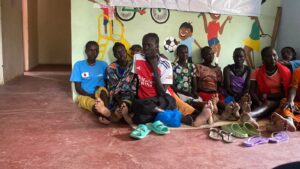
Like film and music growing at a fast rate in the country, getting international recognitions and creating opportunities for many young Kenyans, traditional art, if fully supported like the Masaai culture that has received global recognition, is a tale women and youth in Turkana are eagerly waiting for, with the hope that the Senate will approve the Bill currently in their hands.
This story was featured in the just-launched Luminate Africa Journal first edition of The Africa Feature Network’s end-year magazine, and can be downloaded on our website at the Journal page.


