Monicah Yator reflects on her early life, which was filled with struggles similar to those faced by many women in indigenous communities. Growing up in Baringo, she recalls witnessing the harsh effects of climate change alongside harmful cultural practices such as Female Genital Mutilation (FGM), Gender-Based Violence (GBV), and early marriage, which prompted massive school dropout.
These realities affect many indigenous communities across Africa and are further worsened by global warming, with semi-arid areas being hit the hardest.
Some of these challenges arise from climate shifts, while others result from harmful human activities.
As land productivity declines, access to resources becomes increasingly unequal, leaving many families vulnerable.
Amid resilience and struggle, with grazing fields shrinking and water sources disappearing, Monicah led her community in Marigat, Baringo County, Kenya, to form the Indigenous Women and Girls Initiative (IWGI).
Founded in 2019, this women-led, community-based organization aims to turn hardship into opportunity and restore dignity to those affected by environmental and social injustices.
“We started IWGI because women in these communities carry the heaviest burden,” Yator says. “But they also hold the deepest knowledge, the strongest resilience, and the best solutions.”
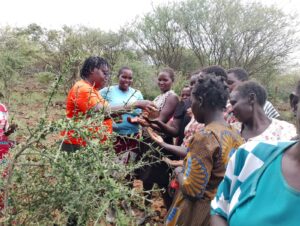
Since its inception, IWGI has become a symbol of hope within the community, promoting education for girls and empowering women across Baringo and neighbouring counties such as Turkana and Elgeyo Marakwet.
Through agro ecology, permaculture, gender empowerment, and policy advocacy, the organisation is changing the narrative of indigenous communities by placing them at the forefront of climate resilience and action.
IWGI believes that healthy land is essential for healthy communities.
In Baringo, years of soil degradation, erratic rainfall, and prolonged droughts have weakened ecosystems and threatened livelihoods.
Yet indigenous cultures possess centuries-old knowledge of land stewardship, which, when adapted, can restore biodiversity through regenerative farming.
IWGI seeks to modernise and enhance this knowledge rather than discard it.
“We don’t teach communities to abandon their traditions; we help them strengthen those traditions using agro ecology and permaculture so they can feed their families with dignity,” Yator explains.
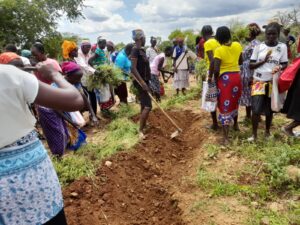
Women farmers are trained in sustainable grazing management, indigenous seed preservation, natural pest control, agroforestry, water harvesting, and permaculture.
These practices rely on locally available resources, enabling farmers to produce food sustainably without depending on costly chemical fertilisers and pesticides.
Since 2019, IWGI has trained more than 1,700 farmers from communities including Kiptingilon, Endorois, Sambalat, Kibingor, and Machakos County.
Participants gain practical tools to restore degraded land and improve food security at both household and community levels.
IWGI has also established agroforestry centres that serve as learning spaces and seed banks, managed entirely by women’s groups.
These centres preserve and exchange indigenous seeds such as sorghum, finger millet, cowpeas, and drought-resistant vegetables, helping to protect biodiversity and strengthen local food systems.
The organization is investing in the next generation by introducing modern farming practices in schools.
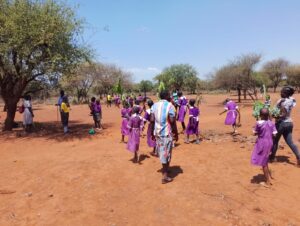
At Sambalat, Tangulbei, Noiywet, and Marigat Comprehensive Schools, students learn how soil, water, plants, and animals work together within healthy ecosystems.
These school farms ensure that indigenous knowledge and environmental stewardship are passed on.
Through partnerships with local grazing committees in Salabani and the Lake Baringo cluster, the organisation trains pastoralists in rangeland restoration and drought-resistant pasture management.
“Indigenous communities understand the land; they just need the tools to protect that knowledge,” Yator says.
IWGI advocates for indigenous voices in climate discussions and is part of networks such as the Indigenous Women Council, Climate Change Working Group–Kenya, the Global Landscapes Forum, and the Alliance for Food Sovereignty in Africa.
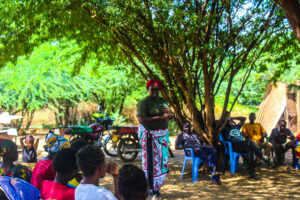
These efforts help indigenous women move from the margins to the centre of climate action, enabling them to shape solutions.
The organisation also links climate justice with gender justice, recognising that women are often the most affected by both climate change and social inequalities.
It has conducted leadership and policy advocacy training in Nakuru and Marigat, equipping more than 100 women with skills in climate policy, governance, and the prevention of gender-based violence.
These forums empower women to participate confidently in decision-making spaces and influence local development agendas.
At the same time, IWGI challenges harmful cultural practices such as early marriage, female genital mutilation, domestic violence, and the denial of women land rights.
“Women cannot lead climate action if they are silenced by violence. When women are empowered, they create healthier environments for everyone.” She emphasizes.
The organization complements this work with health education programmes focused on child rights, sexual and reproductive health, menstrual hygiene, and environmental health.
With land restoration remaining a core part of IWGI’s mission, the organization has planted more than 60,000 trees across its project areas, contributing to biodiversity conservation, reducing soil erosion, and revitalizing water catchments.
However, challenges such as land grabbing, insecure land tenure, and development pressures continue to threaten indigenous communities and their ancestral lands.
“Land is more than property; it is identity, culture, and memory. When you lose land, you lose everything.” Yator states.
In response, they continue to work with partners to protect land rights, uphold traditional resource management practices, and ensure community participation in land-related policies.
Although the IWGI demonstrates that community-led solutions are both practical and powerful, their work is far from finished as more women need training, more land requires restoration, and more voices must be heard.
Yator states that they are actively seeking volunteers, partners, and supporters to expand the IWGI’s impact.
This story was featured in the just-launched Luminate Africa Journal first edition of The Africa Feature Network’s end-year magazine, and can be downloaded on our website at the Journal page.