Kenya is targeting a reduction in maternal mortality to fewer than 70 deaths per 100,000 live births by 2030. Yet the country’s maternal mortality ratio remains at 355 deaths per 100,000 live births, while Migori County’s rate stands at 673 deaths per 100,000 live births, according to county health and planning reports.
For years, emergency referrals in the county have relied largely on phone calls between health facilities, ambulance drivers and healthcare workers, leaving gaps in coordination and limited visibility of ambulance movements.
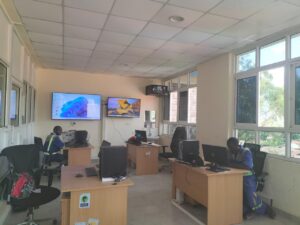
In November 2025, Migori County, in partnership with the Emergency Medicine Kenya Foundation, introduced a centralised emergency dispatch centre at Migori County Referral Hospital to address some of these challenges.
At the centre of the new system is Ambulancee, a digital ambulance dispatch and fleet management platform that became fully operational in February 2026.
The system allows emergency teams to identify the nearest available ambulance, track its movement and communicate with the receiving facility before a patient arrives.
“When a call comes in, we record who is calling, where they are and the condition of the patient,” Migori County Emergency and Referrals Coordinator Catherine Tingo said. “With that information, the nearest ambulance is dispatched and the receiving facility is informed in advance so that they can prepare adequately to receive the patient.”
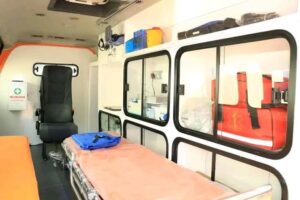
All 11 county ambulances have been fitted with tracking devices, according to Tingo, allowing health officials to monitor their location, fuel usage and fleet performance from a central command centre.
The ambulances are strategically stationed across the county’s eight sub-counties, enabling dispatchers to identify and mobilise the closest available vehicle.
“Initially, calls used to come in and we did not have a well-coordinated system, causing delays and fatalities,” Tingo said. “Now we have centralised communication and coordination. We are looking forward to a system whereby, on the click of a button, everybody is able to respond.”
The dispatch centre is also linked to other emergency responders, including the police, fire services and the Kenya Red Cross, allowing different agencies to coordinate during major incidents such as road accidents, disease outbreaks and building collapses.
Tracking ambulances beyond the road
One of the system’s key features is its fleet management component, which allows county officials to monitor fuel consumption and vehicle movement in real time.
For Tingo, this has direct implications for emergency response.
“There is a time you can prompt the system for an ambulance to go for a patient and it is not having adequate fuel for the distance to be covered,” she said. “The system helps us make effective decisions because if the ambulance is not having fuel, then it is not useful for that emergency.”
The platform also tracks ambulance speeds, helping officials monitor the safety of patients and emergency crews.
“At times you may assume you are helping the patient, but at the same time you can become a casualty en route,” Tingo said. “The system helps us monitor and advise our operators.”
The dispatch centre began daytime operations in February 2026 before transitioning to a 24-hour service later in the year.
Since its introduction, Tingo said, the system has helped improve coordination and accountability during referrals.
Previously, dispatchers largely depended on verbal updates from ambulance crews. The digital platform now provides an independent record of vehicle movements.
“A driver could tell you they have left the station, yet they are still there,” Tingo said with a smile. “But from here, you are able to see that. The system shows the exact time a call came in, when the ambulance left, and when it arrived.”
The data generated by the platform is also helping county health managers understand referral patterns and ambulance utilisation while maintaining patient confidentiality.
Emergency care begins before the ambulance arrives
For Migori County Director of Medical Services Dr. Dann Ochiel, the value of the dispatch centre extends beyond tracking ambulances.
He says the system allows emergency support to begin from the moment a call is received, rather than waiting until a patient reaches a health facility.
“First of all, we are excited that after three months of piloting, we are launching our dispatch centre for Migori County to help us improve referral services,” Dr. Ochiel said.
Previously, he said, referrals largely depended on communication between health facilities, while community members experiencing emergencies had limited options and often had to reach a health facility before the referral process could begin.
“Before, ambulances were stationed at facilities and referrals were handled from one facility to another,” Dr. Ochiel said. “You could not call directly from the community.”
This often created delays, particularly for patients in remote areas who required specialised care.
Under the new system, trained personnel at the dispatch centre can assess information provided during a call and guide patients towards the most appropriate facility.
Four nurses trained in emergency care provide advice and pre-arrival instructions while an ambulance is being dispatched, according to Dr. Ochiel.
“If you call and say you have chest pain, chest pain can come from many things,” he said. “The technical staff here are able to advise you on some of the steps you can take even as you wait for the ambulance.”
The same approach applies to accident victims, patients suffering severe bleeding and pregnant women experiencing complications, he said.
“If you have a patient who is bleeding and she is pregnant, they will not tell you to go to a facility that cannot help,” Dr. Ochiel said. “They will advise you where to go as the ambulance is coming.”
The ability to assess patients remotely and direct them to facilities equipped to handle their conditions is expected to reduce unnecessary transfers and shorten the time taken to receive definitive treatment.
“We have built the capacity of the staff and we hope that by doing that, the efficiency in referral will be improved,” Dr. Ochiel said.
Connecting communities to emergency care
The dispatch centre has also opened a direct line between communities and emergency responders.
Residents can now call for assistance from their homes and receive guidance from trained healthcare workers before reaching a health facility.
“I think the most important thing that we have introduced is that even in your own house, you can call the numbers provided,” Dr. Ochiel said. “The ambulance team and technical staff can advise you on what to do as you move to the next facility.”
The approach is intended to address one of the longstanding gaps in Migori’s emergency referral system: the distance between communities and formal healthcare facilities.
However, the digital system has not eliminated the physical and logistical challenges facing emergency response in the county.
Poor road networks in some parts of Migori continue to slow response times, while frequent ambulance breakdowns remain a concern.
“We still have a long way to go in having proper ambulances in our county,” Tingo said. “Some of them experience frequent breakdowns, so maintenance is an area we need to improve.”
Staffing is another challenge. The dispatch centre currently operates with a team of 10 personnel, but Tingo says additional staff will be needed as demand grows.
Despite these challenges, she says the early experience with the system is encouraging.
“The delays are reducing,” Tingo said. “What we need now is for communities to know that the service is available and to use it.”
The County Government of Migori has allocated Sh21 million in the current financial year to sustain the centre, according to Migori County Health CEC Caleb Opondi.
The county also plans to expand the ambulance fleet, with funds set aside for routine maintenance of the existing vehicles.
For a county where maternal mortality remains significantly above the national average, the test of the new system will ultimately be whether faster coordination translates into patients receiving appropriate emergency care in time.
For now, the dispatch centre is changing how emergency referrals are coordinated, bringing ambulance tracking, remote triage and communication between communities, health facilities and emergency responders into one system.