
Kenya’s 2010 Constitution introduced devolution, which created 47 county governments. The 47 counties fund projects that fall within their purview with own source revenue and support from the national government. This constitutional reform was aimed at devolving administrative functions.
The old system was marred with challenges ranging from marginalization to skewed development. In Kenya, article 217 elaborates a constitutional process of division and equitable share of the nationally raised revenues among the 47 counties. At least 15% of the national revenue was allocated for County governments from the National government
Since 2013, over 3.8 trillion Kenyan shillings have been disbursed to counties. The road network, healthcare, water and sanitation projects and early childhood education have improved. Previously neglected regions such as the Coast and North-Eastern have recorded tremendous improvement.
Politically, devolution has significantly lowered the stakes of presidential elections by giving every community control over local resources and power, thereby easing ethnic tensions. This problem dominated the centralized system of governance.
Despite the tremendous development that counties have recorded since the advent of devolution, Kenyans in rural counties still cry foul over a widening gap between the theory of local governance and the reality of services on the ground.
Corruption cases, bloated county wage bills, stalled projects, and delayed disbursement of allocations have been cited as reasons why certain counties are still lagging in terms of development. Deep in the villages, the government’s presence is not felt as the citizenry struggles to access basic services. Critical services like healthcare have stalled. To help voice the concerns, the Eastern Africa Collaboration on Economic, Social and Cultural Rights (EACOR) stepped up.
Under the directorship of Mrs Bether Kokach, the organization speaks for the people, clearly spelling out the ignored articles of the Constitution on Economic, Social and Cultural Rights (ESCR).
EACOR, registered in Kenya as a human rights organization, was founded on the belief that rights cannot be enjoyed when they exist only in ink.
“We saw that everyone was celebrating the Bill of Rights,” Bether says, “but almost nobody was talking about Chapter Four: the economic, social and cultural rights. Water, health, and education. The right people wake up and use every single day.”
Where others focused on service delivery, EACOR’s attention was drawn to the often-overlooked power held by citizens.
EACOR’s approach is anchored in one radical shift, reframing Economic, Social and Cultural Rights (ESCR) not as charity but as constitutional entitlements. This shift has made citizens see governance not as an act of benevolence from leaders, but as an obligation owed to them.
To make this shift real, EACOR runs a flagship programme funded by Bread for the World, a German development agency. The programme is designed to cultivate active citizenship by equipping ordinary people with practical knowledge on how public finance works, how county budgets are made, and how to demand accountability.
“We get funds from Bread for the World in Germany for our project. For this project, the main objective and goal is to empower citizens to be able to demand these rights from the duty bearers,” said Kokach.
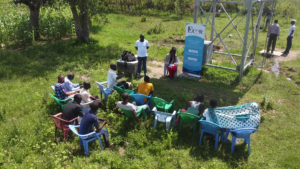
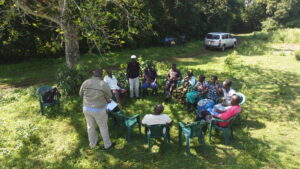
She outlines that community empowerment begins with training Agents of Change, volunteers drawn from local villages who are taught public finance, the Constitution, social accountability tools, and advocacy skills.
“They return home not with handouts, but with confidence and information. And when they speak, their neighbours listen,” Kokach affirms.
Ms Pheny Akinyi, EACOR’s Programs Officer, recollects the hurdles they have experienced in the line of duty.
“When we started implementing this particular project, there was a lot of misunderstanding between us and some County government officials,” said Akinyi, who narrates how ward administrators got alarmed when a large number of residents began turning up for public participation meetings without being mobilized or offered sitting allowances.
“When hundreds of people show up for public participation without the usual invitation or promise of sitting allowance, ward administrators panicked. Some accused us of inciting people.” Pheny states humorously.
But as officials interacted more with EACOR and saw its methods, resistance softened. Conversations replaced confrontations. Mutual trust kicked in and communities realized their voices had weight.
According to EACOR’s field agent Timothy Ochieng, who is based in Migori, the trained residents began participating in forums where budgets and development plans were discussed, and their input started shaping outcomes.
“We trained community members to ensure that projects were chosen based on community priorities, not political expediency,” Ochieng revealed.
Even though the fruits of civic education are evident within the communities, old habits persist. Some community members still expect and demand financial support from NGOs. Benedict Ogutu, a field agent in Homabay, explains how the organization overcame such challenges.
“From the onset, we envisaged this. And in our community outreaches, we clarified, and we made the community understand that this project is meant for them, to empower them to address various challenges they are facing, particularly in our focus areas,” said Ogutu
It is a message that has shaped the community to prioritize empowerment over charity as a lasting solution to existing problems.
EACOR’s biggest victories are not loud; they are evident in places where neglected projects suddenly come back to life.
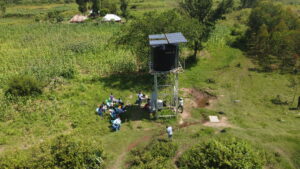
An example is a borehole, drilled in 2019 by the county government of Migori. For six years, it posed a health hazard as stagnant water was a source of disease to the community. After EACOR’s intervention, community leaders confronted the issue with clarity.
“We were told to follow the right channels. That is why we went to our ward administrator to seek clarification about our stalled project,” says Mr Harrison Ouma, the Nyambona community water project chairperson.
According to Ouma, the knowledge of their rights prompted their action. The borehole has since been constructed.
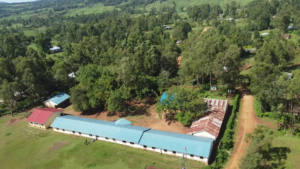
In central Sakwa Ward, Migori County, pupils and villagers covered long distances to access water since the borehole project at the school stalled. With EACOR’s guidance, the community demanded to see the County Integrated Development Plan.
“We decided to contact the ward administration to tell us if the project had an allocation,” says Mr Samwel Agwena, the project’s chairperson. Budget documents revealed funds had been allocated, putting the project’s completion back on track.
“What the EACOR team has done here is much better,” notes Mr Jared Osuri, the Head of Alara Dago Comprehensive School. “Without them, we could not realize that we were missing something here in this community.”
In Homabay County, residents of Kojwach ward celebrated the completion of their maternity block, which had stalled. EACOR awakened the residents to push for the clearance of the contractor’s outstanding debts, which facilitated the project completion.
“I took the initiative to call our MCA,” says Mr Isaac Onyango, the facility chairperson. We are happy that mothers now deliver safely, he added.
Across Migori and Homabay, public participation has brought forth results. Citizens question authorities and track projects independently. On WhatsApp groups and social media platforms, discourse on regional development has been heightened.
According to Mr Henry Oteino, Ward Administrator of Kanyikela, “the community has become bold in pursuing authorities over unfulfilled promises. “If something is not done according to the Bill of Quantities, it is on my neck. That is exactly what devolution was supposed to look like.”, reiterates Otieno
Henry’s counterpart, James Nyandika of Kojwach Ward, acknowledges the shift, noting that sensitization has increased uptake of both county and national programmes.
EACOR also works with local and national civil society groups to amplify citizen concerns. Their social audits and community trainings have formed part of the policy debates.
Caleb Wanga of Usalama Reforms Forum notes that EACOR’s work has empowered local communities to question how public finances are utilized.
“Their work has greatly impacted policy formulation or policy review at the county level and also at the national level,” said Caleb.
To sustain accountability, EACOR ensures communities have the skills to conduct social audits, verifying how public resources are used and if services promised are delivered. A social audit is a community-driven process of evaluating how public resources are used and whether government projects and services meet the needs of the people. It promotes transparency, accountability, public trust and citizen participation in governance.
Zephania Change, the organization’s head of Monitoring and Evaluation, explains that social audits require a level of knowledge to understand the processes.
“Conduction of a social audit is a challenge, especially when selecting the right candidates to train,” he says, “In terms of the people that we get, if you get somebody who has no solid background, no educational background, then it will also be a challenge for them to grasp and to engage the duty bearers,” added Zephania
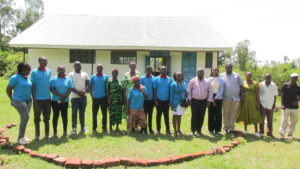
To overcome the challenge, community members work alongside qualified and experienced agents.
“We ensure that our recruits meet some level of education,” explained Change.
According to the director, through empowerment, training and building local networks of agents of change, EACOR is creating a lasting voice that will survive beyond the program’s timeline.
“These local champions, ordinary citizens, are the real face of EACOR. They will keep demanding better services, even without external funding or staff,” said Mrs Kokach.
This story was featured in the just-launched Luminate Africa Journal first edition of The Africa Feature Network’s end-year magazine, and can be downloaded on our website at the Journal page.