
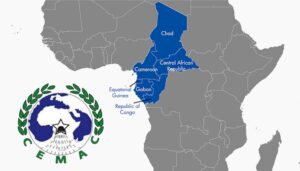
For more than four decades, the economies within the Central African Economic and Monetary Community (CEMAC) – Cameroon, Chad, Gabon, Equatorial Guinea, Congo-Brazzaville and the Central African Republic – have lived under the long shadow of oil. Crude petroleum has been both a blessing and a burden, funding national budgets while leaving countries exposed to the volatility of global commodity markets. Across the region, hydrocarbons account for close to three quarters of total exports.
When global prices dip, government revenues fall sharply. When they rise, growth surges, yet few long term jobs are created. Once every boom ends as history always shows, the weakness beneath the surface becomes impossible to ignore. In recent years, regional economic growth has slowed to a fragile pace with only modest improvement anticipated.
Yet beneath this fragility lies another story, one centred not on crisis but possibility. Central Africa is rich not only in oil, but also in land, forests, minerals, rivers and a generation of young innovators. As the world shifts towards sustainability, the region’s path to renewal may lie in long neglected sectors.
Emerging industries such as modern agriculture, renewable energy and forest and nature based economies hold the potential not only to reduce the region’s dependency on oil but to reshape its future entirely.
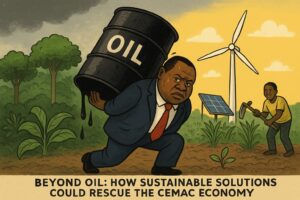
Across the CEMAC region, nearly half of the labour force depends on agriculture, yet productivity remains among the lowest globally. Much of the work is manual, roads linking farms to markets are poor and value chains remain largely informal.
Green shoots of transformation are emerging. In Chad, innovators are producing small scale mechanisation kits, locally engineered tractors, threshers and solar irrigation systems designed for Sahelian conditions. Because these tools are cheaper and easier to maintain than imports, smallholder farmers are gaining their first genuine chance at scale.
In Cameroon, young enterprises are turning waste into opportunity. One youth-led initiative is converting sawdust, household waste and cassava starch into clean burning briquettes, reducing pressure on forests while opening a new circular economy industry.
Across the region, cassava processing hubs, gum arabic cooperatives and cocoa to chocolate manufacturing units are showing that agriculture, when modernised, can become a powerful driver of jobs, resilience and rural prosperity.
Few sectors illustrate CEMAC’s development paradox more clearly than energy. Despite abundant sunshine, rivers and biomass resources, electricity access remains low. In many rural communities, electrification barely rises above 20 per cent. Clinics operate without refrigeration, schools rely on daylight and businesses struggle to expand.
Renewable energy is slowly rewriting this narrative. In Equatorial Guinea, women led renewable energy firms are gaining a foothold. Solar mini grids are now powering schools, small hydropower units are lighting clinics and biomass briquettes are reducing household energy costs.
These projects signal the early stages of a wider shift towards a decentralised, clean and community driven energy future. Such a transition would strengthen climate smart agriculture, improve forest governance, support wildlife conservation and bolster the responsible management of natural resources across Central Africa.
Beyond hydrocarbons, the CEMAC bloc is home to one of the planet’s greatest ecological treasures, the Congo Basin. Often described as Africa’s lungs, it is the world’s second largest rainforest and a cornerstone of global climate stability.
Gabon has begun transforming this natural wealth into economic value through biodiversity monitoring, forest certification and emerging carbon credit systems. Young ecologists and conservationists are demonstrating how nature can generate revenue without destroying it.
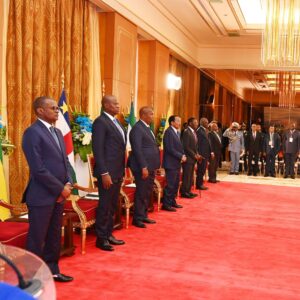
The opportunity extends across the region. Congo Brazzaville, Cameroon and the Central African Republic all possess vast untapped potential in ecotourism, sustainable timber processing, carbon markets and forest based enterprises. How Central Africa values its forests may ultimately determine its long term economic future.
Even the strongest innovations require supportive institutions to thrive. Across the CEMAC bloc, fragmented markets, weak property rights, cumbersome administrative procedures and low levels of intra regional trade continue to hold back private sector growth.
Regional institutions such as the Bank of Central African States and the CEMAC Commission have introduced financial inclusion frameworks and industrialisation strategies. However, progress is often slow and implementation gaps remain wide.
For sustainable sectors to flourish, the region must accelerate reforms that link policy to the realities of entrepreneurs and rural communities. This includes improving infrastructure, easing business registration processes, lowering the burden of taxation on start ups and encouraging local manufacturing and agro processing. Strengthening regional value chains remains equally critical.
The CEMAC region sits at a crucial junction, geographically and politically. It connects West, Central and East Africa and contains both great natural wealth and recurring instability. This exposure brings significant risk, from insecurity and refugee flows to illicit trade, but it also presents an opportunity.
A more diversified and integrated regional economy could become a source of stability across Central Africa. Encouraging signs are emerging, youth innovators creating clean fuel from waste, conservationists mapping biodiversity with digital tools and renewable energy entrepreneurs led by women reshaping access to power.
These initiatives show that change is already under way, powered by people closest to the region’s challenges and possibilities.

The question is no longer whether CEMAC can diversify, but whether it will. Will political leaders commit to reforms that may unsettle the status quo? Will institutions create space for young innovators? Will the region finally invest in sectors that offer long term transformation rather than short lived cycles of oil wealth?
If the answer is yes, Central Africa could transform from a vulnerable, oil dependent bloc into a dynamic region driven by agriculture, clean energy, nature based industries and civic innovation. If successful, the CEMAC story may redefine what an African development miracle looks like, built on sustainability, resilience and the creativity of its people.
Across the CEMAC bloc, key socio economic patterns highlight both the extent of oil dependency and the scale of untapped opportunity. The different countries present specificities based on their local realities and economic potentialities as follows:
In Cameroon, petroleum still accounts for nearly half of exports, despite more than half of the workforce relying on low productivity agriculture. Electricity access is improving but remains uneven.
Chad continues to depend heavily on oil for export earnings, yet rural electrification remains low and farming mechanisation is limited. Gabon retains a strong reliance on hydrocarbons, and although it has made advances in forest governance, rural electricity access remains constrained. Equatorial Guinea earns the overwhelming majority of its export revenue from oil, while agricultural employment remains low and energy access still excludes much of the population. Congo Brazzaville continues to rely on petroleum exports, and electrification remains patchy. The Central African Republic, though not dependent on oil, continues to grapple with fragility, a weak export base and extremely low rural electricity access.
This story was featured in the just-launched Luminate Africa Journal first edition of The Africa Feature Network’s end-year magazine, and can be downloaded on our website at the Journal page.


