
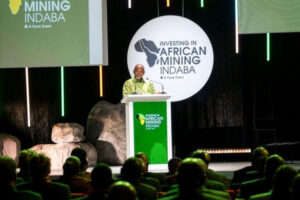
What if the deepest pools of capital on Earth were sitting atop a hidden treasure, billions of dollars that could transform mining regions, yet have never found their way to the people whose labor creates global value?
Many countries in Africa, artisanal and small-scale mining communities extract the minerals that power modern industry. Cobalt from the Democratic Republic of Congo drives battery production. Copper from Zambia feeds global infrastructure and renewable energy systems. Gold from Ghana strengthens export earnings and local livelihoods. With these vast mineral deposits, the communities closest to these sites remain structurally excluded from formal finance, long-term investment and institutional capital.
The World Bank in the 2023 State of the Artisanal and Small-Scale Mining Sector estimates that more than 45 million people worldwide are directly engaged in artisanal and small-scale mining. Over 100 million depend on it indirectly. A significant proportion of those miners are in Africa.
The report also highlighted a persistent and critical barrier with access to finance remaining one of the largest constraints preventing the sector from formalizing, scaling responsibly, and delivering sustainable development outcomes.
Africa holds roughly 30 percent of the world’s known mineral reserves. It is home to vast deposits of gold, cobalt, lithium, manganese, platinum, bauxite and rare earth elements. Yet across the continent’s mining communities, infrastructure gaps, undercapitalized operations, environmental risks, and informal trading structures persist.
The paradox is that capital exists globally in unprecedented volumes. Sovereign wealth funds, pension funds, climate finance vehicles, development banks and private equity firms collectively manage trillions of dollars. Meanwhile, mining regions across Africa remain chronically underfinanced.
How Financing Gaps Hold Back African Mining Communities
In Nigeria, Engr. Akintunde Akinrogunde, Director of Artisanal and Small Scale Mining at the Federal Ministry of Solid Minerals Development, has been vocal about the sector’s untapped potential. He has consistently emphasized that artisanal mining holds enormous economic opportunity for Nigeria, particularly in rural communities where alternative employment is limited. At the same time, he acknowledges that underfinancing and regulatory gaps continue to restrict growth.
Akintunde, while delivering a speech during a panel discussion at a major ASM finance forum hosted by Greychapel Legal on July 23, 2025, noted that even though ASM holds incredible economic opportunities for Nigeria, the mining sector still remains underfinanced and marginalised. Akintunde noted
He also framed the core challenge facing Nigerian artisanal miners, noting that limited access to collateral, credit history, and technical capacity hinders financial inclusion and leaves miners reliant on exploitative middlemen.
Kenya faces a parallel challenge. In regions such as Migori county in the Western part of the country, miners often hold valid licenses but remain outside formal credit systems. Reports from local mining cooperatives show that banks frequently classify artisanal mining as high risk, regardless of actual production performance. Initiatives led by organizations such as Solidaridad and the Impact Facility have demonstrated that when miners organize into cooperatives, improve record keeping, and adopt safety and environmental standards, financial institutions begin to reassess their risk profiles. However, these interventions remain limited in scale.
Zambia’s Ministry of Mines has recognized the need to strengthen access to capital for small-scale operators. Copper remains central to Zambia’s economy, yet many artisanal miners rely on informal high-interest loans that restrict growth. Policymakers have increasingly stressed that professionalization, training, and structured financing are necessary to stabilize production and reduce social conflict in mining regions.
“Our goal is to create financing pathways that empower local miners while maintaining sustainable copper output,” Deputy Minister of Mines, Fortune Chiyembe, noted during a public address in 2024.
In the Democratic Republic of Congo, the world’s largest producer of cobalt, artisanal miners play a significant role in mineral supply chains. Production often occurs in hazardous conditions and without formal financial support. Godard Motemona Gibolum, Deputy Minister of Mines, stated that they have a vision that aims to add more value to minerals which in long run will provide jobs for people in the country
“We have a new vision – one in which we are adding more value to minerals and providing jobs for the people of our country,” Gibolum said during the Mining in Motion 2025 summit.
Mining analysts in the DRC argue that formalizing artisanal operations and linking them to structured financial instruments could improve safety, stabilize output, and reduce environmental degradation while ensuring communities share more equitably in mineral wealth.
The financing gap in African mining regions is not merely a technical issue but rather a governance and legitimacy challenge. Research on mining conflict indicates that social unrest around mining operations can impose significant financial losses on companies and governments. A Harvard Kennedy School study from 2022 found that conflict could cost companies tens of millions of dollars per week in delayed production. This reality has forced policymakers and investors to reconsider how capital flows interact with local economic inclusion.
Emergence of Stakeholder Prosperity Bonds as a Financial Innovation
With these widening gaps in one of the world’s largest sources of income, the stakeholder prosperity bonds are emerging as a strategic innovation. Unlike traditional green or sustainability-linked bonds, which often focus on environmental compliance metrics, stakeholder prosperity bonds tie financial performance directly to measurable improvements in community welfare and economic participation. The central idea is that capital should not merely finance extraction. Instead it should finance prosperity.
Loren Stoddard, Founder and Chief Executive Officer of Veridicor , describes this approach as a shift from compliance-based sustainability to outcome-based legitimacy. He believes that when operational continuity in mining is relational,when communities, regulators, and investors all influence project stability and when financial instruments explicitly reward measurable progress in local income growth, professional training, infrastructure development, and environmental performance,the risk profile of mining operations improves.
Rob Karpati is a multi-national finance leader and Partner and Senior Advisor at The Blended Capital Group as well as the Director of Finance at Veridicor .
Over the last three decades, he has focused on designing investment frameworks that generate tangible social and environmental impact, particularly in the artisanal mining sector with his work emphasizing the connection between financial capital, stakeholder trust, and measurable community outcomes, advocating for approaches that move beyond compliance to real, lasting impact.
In an exclusive interview with The Africa Feature Network at his Toronto office in Canada, Rob said that long-term stability in mining projects depends on communities experiencing real economic and social benefits:
“Investors increasingly recognize that risk mitigation requires tangible local value creation. When communities experience economic participation rather than marginalization, production becomes more predictable and socially sustainable.” Rob noted
His position aligns closely with the concept of Stakeholder Prosperity Assurance (SPA) — a framework he and Loren Stoddard have written about — which focuses on measuring actual improvements in financial outcomes and quality of life for communities surrounding mining operations. Mr. Karpati believes that conventional Environmental, Social, and Governance (ESG) and social license frameworks often stop at compliance, whereas SPA embeds monitoring, measurement, and re-planning to ensure promised benefits are delivered.

According to Rob, financial flows tied to measurable outcomes — such as artisanal mining professionalization, infrastructure development, and safer production practices — transform traditional investment risk into community-aligned opportunity. By integrating these metrics into instruments like Stakeholder Prosperity Bonds, investors and mining companies can simultaneously achieve operational continuity and positive local impact.
At the core of stakeholder prosperity bonds lies the principle of measurable impact. Financial flows are linked to defined indicators such as increased household income among miners, formal registration of cooperatives, adoption of safer production techniques, and investment in local infrastructure. This structure aligns incentives across stakeholders.
In Ghana, the planetGOLD initiative supported by the United Nations Development Programme has demonstrated how financial inclusion and environmental reform can work together. Through training and financial literacy programs, miners gained the knowledge necessary to approach formal financial institutions. Some participants reported improved confidence in engaging with banks after understanding documentation requirements and production data reporting.
Michael Kwadwo Peprah, President of the National Concerned Small-Scale Miners Association of Ghana, noted that financial instruments that recognize their capacity and growth potential are the key to transforming artisanal mining from survival activity to sustainable enterprise.
Academic research on artisanal mining finance in Nigeria has similarly highlighted that lack of bankable feasibility data remains a primary barrier. Stakeholder prosperity bonds can address this gap by embedding technical assistance and data transparency into financing frameworks. Capital is not released blindly. It is deployed alongside capacity building and monitoring systems that verify outcomes.
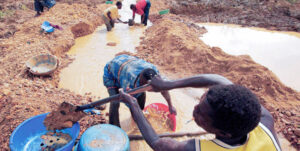
In Kenya, dialogues facilitated by mining development organizations have shown that cooperative structures increase credibility. When miners pool production data and operate under unified governance, lenders perceive reduced fragmentation and improved accountability. Linking bond performance to cooperative registration and compliance milestones can strengthen both financial access and governance standards.
Zambia’s policy discussions around formalization have also emphasized that structured financing must be accompanied by training and regulatory clarity. Bonds that condition capital on formal licensing and environmental compliance can support these national objectives while attracting international investors seeking stable returns.
In the DRC, where concerns about environmental and labor standards are frequently raised in global supply chain debates, measurable outcome financing could provide a pathway toward transparency. Stakeholder prosperity bonds could help rebuild trust in artisanal cobalt supply chains by tying capital to verified improvements in safety conditions and income distribution.
Aligning Global Capital With African Policy and Prosperity
Africa’s mineral wealth is central to the global energy transition. Cobalt, lithium, copper, and rare earth elements are essential for batteries, electric vehicles, and renewable infrastructure. The African Union’s Africa Mining Vision has long called for value addition, community participation, and sustainable development. Yet implementation gaps remain, particularly in the financing of artisanal and small-scale operators.
Stakeholder prosperity bonds align closely with these continental policy goals. By linking investment returns to measurable community advancement, they translate policy principles into financial architecture. Nigeria’s renewed emphasis on diversifying its mineral sector beyond oil presents an opportunity to integrate innovative financing models. Engr. Akinrogunde has consistently argued that strengthening ASM can increase revenue, reduce illegal mining, and create rural employment. A bond structure that channels capital toward professionalization directly supports this objective.
Zambia’s ambition to expand copper production while ensuring local participation similarly benefits from structured capital tied to prosperity indicators. Zambia could strengthen small-scale production while reducing reliance on informal leaders by integrating bond financing with ministry oversight.
In the DRC, where cobalt supply chains face global scrutiny, measurable prosperity financing could enhance credibility in international markets. Transparent outcome reporting would reassure investors and downstream manufacturers that supply chains are improving in social and economic terms.
Kenya’s efforts to formalize artisanal miners under updated mining regulations also create a conducive environment. Financial instruments that reward compliance and cooperative governance can reinforce regulatory reform.
For investors, the appeal lies in risk reduction. Research in mining finance consistently shows that social instability increases operational uncertainty. When bonds are structured to incentivize local prosperity, community support becomes a financial asset rather than a compliance afterthought.
Building Durable Mining Economies
The long-term impact of stakeholder prosperity bonds extends beyond immediate financial inclusion. When miners gain access to affordable capital, they invest in better equipment, improve recovery rates, and adopt safer technologies. Increased productivity raises household income, which stimulates local economies. Infrastructure investments tied to bond performance can improve roads, water systems, and energy access in mining regions. Education and training programs embedded in financing frameworks build human capital. With time, this reduces dependency on informal practices and strengthens regulatory compliance. Environmental performance improves when miners can afford safer processing methods and waste management systems.
The cumulative effect is the transformation of mining regions from extraction sites into economically resilient communities. This aligns with broader development strategies across Africa, which seek to move beyond raw export dependency toward inclusive growth.
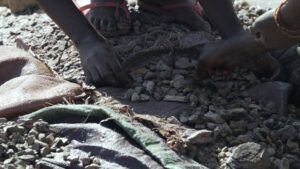
The hidden treasure referenced in the opening question is not merely the mineral deposit beneath the soil. It is the economic potential of millions of miners and their families. Global capital exists in abundance. The challenge has been designing instruments that align that capital with measurable prosperity.
Stakeholder prosperity bonds represent one such instrument. They connect research findings on financial exclusion with policy objectives for formalization and sustainable development. They incorporate leadership perspectives from Nigeria, Kenya, Zambia, Ghana, and the Democratic Republic of Congo. They reflect investor recognition that community alignment reduces risk. And they respond to global calls for responsible mineral sourcing.
If structured carefully, monitored transparently, and integrated into national mining strategies, these bonds could redefine how capital interacts with African mining economies. Instead of financing extraction alone, markets would finance transformation.
The future of Africa’s mining sector will depend not only on geological wealth but on financial innovation and political will. When capital, policy, and community interests converge around measurable prosperity, mining regions can become engines of inclusive economic growth rather than enclaves of underdevelopment. The question is no longer whether capital exists but whether financial systems will evolve quickly enough to unlock the prosperity already present in Africa’s mining heartlands.


