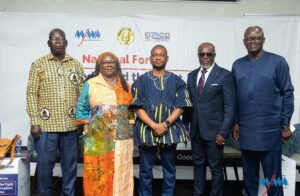
A unified and coordinated media front is key to advancing Ghana’s fight against corruption, speakers at a National Forum on Media and the Fight Against Corruption have said. They fear that a disjointed media will weaken accountability efforts and allow impunity to thrive.
The call, made by speakers at the forum, was strongly supported by panellists who argued that although Ghana has built extensive legal and institutional frameworks to combat corruption, the absence of sustained, collective media pressure continues to limit tangible outcomes.
The forum, organised by the Media Foundation for West Africa with support from DW Akademie, brought together journalists, legal practitioners, academics and anti-corruption advocates to reflect on the challenges and opportunities in strengthening accountability systems.
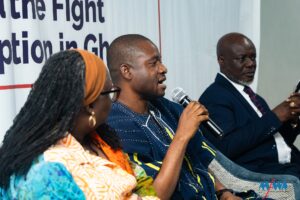
Delivering opening remarks, Sulemana Braimah, Executive Director of the Media Foundation for West Africa, stated that although Ghana has an active media landscape, corruption remains a persistent issue.
“Corruption tends to hide in the darkness. But in our context, sometimes it appears that corruption lurks in the broad daylight,” he noted.
He stressed that while investigative journalism has uncovered scandals, from procurement irregularities to ghost names on public payrolls, those exposures hardly led to any sanctions. “The gap between investigative reporting and actual sanctions remains a critical challenge,” he added.
Ghana’s performance on the Corruption Perception Index, which has stagnated below the 50 per cent mark for years, was cited as evidence of this gap.
Within this context, speakers and panellists described the media’s role as indispensable but under-optimised. They argued that the media has the constitutional mandate to set the anti-corruption agenda, raise awareness, and scrutinise public institutions.
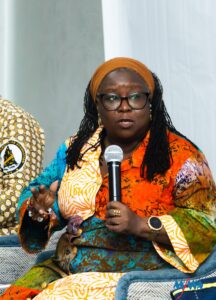
They, however, cautioned that this role is weakened when media houses operate in silos or fail to follow through on investigative work. Some cited instances where media organisations either ignored investigative reports or amplified responses from accused individuals without adequately engaging the original findings.
Former Executive Director for Transparency International, Vitusm Azeem, pointed to the need for collective action, noting that corruption persists partly because of weak institutional responses and public complacency.
He reiterated that although journalists continue to expose wrongdoing, accountability often depends on state institutions, which mostly fail to act decisively.
He said the fight must also go beyond legal technicalities to include moral responsibility. He added that “it is essential to note that media scrutiny should not be misconstrued as an attack on public officials, but rather as a constitutional duty to demand accountability”.
On the legal considerations, Dickson Tweneboa Kodua, a member of the Ghana Bar Association, emphasised that the fight against corruption must be conducted within the confines of the law. He explained that while the media plays a crucial watchdog role, it does not have prosecutorial authority.
“We don’t live in a country where the media can prosecute,” he said, while noting that investigative findings must be handed over to state institutions for further action.
He added that the legal framework allows accused persons to defend themselves, including through appeals, which can slow down the accountability process but remain essential to due process.
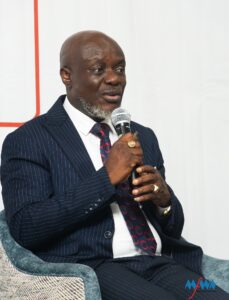
For investigative journalists, the challenges go beyond legal limitations. An associate editor at the Fourth Estate, an investigative journalism project of the MFWA, Seth Bokpe, described a system where reporters are often forced to go beyond their core role to ensure action is taken on their work.
“As a journalist, you expect that once you produce a story… the next level of action will be a state institution taking action,” but you are forced to become an advocate… insisting that the right thing must be done,” he said.
He also cited instances where institutions failed to act even after damning investigations, leading to prolonged inaction. He expressed frustrations over divisions within the media, where some outlets fail to amplify investigative reports but quickly publish rebuttals, which, according to him, weaken the collective watchdog role.
On media development, Prof. Audrey Gadzekpo, a professor of communication and media studies at the University of Ghana, stressed the need for sustained investment in training and capacity building. She noted that although the media is not a statutory anti-corruption body, it plays an indispensable role in setting the accountability agenda.
She said the importance of strengthening investigative skills and maintaining independence, warning that over-reliance on allegations without rigorous verification can undermine credibility.
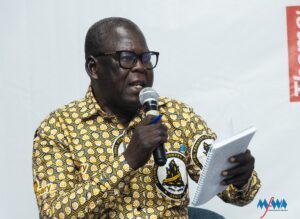
Across the discussions, the panellists identified other key interventions needed to strengthen the media’s role in fighting corruption. These include the passage of anti-Strategic Lawsuits Against Public Participation (SLAPP) laws, improved legal protection for journalists, increased funding for investigative journalism, and better conditions of service within the media industry.
Participants also called for a more responsive judiciary, free legal assistance for journalists facing lawsuits, and stronger collaboration between media houses to present a unified front against corruption.
Closing the forum, the speakers further reiterated that the fight against corruption requires a collective national effort. As Sulemana Braimah noted, “corruption is fought not only in the courtrooms, but also in the newsrooms, and with the courage of those who dare to speak truth to power.”