
Delegates attend an Agenda 2063 conference during the African Union Summit, February 16, 2025 //Photo courtesy
When African heads of state gathered in Addis Ababa in May 2013 to celebrate 50 years since the founding of the Organisation of African Unity, now the African Union, their eyes were fixed on the future. The Dr Nkosazana Clarice Dlamini-Zuma–led meeting was not about nostalgia but reimagining Africa’s place in the world. Out of those reflections came the Africa Agenda 2063, a continental vision for a peaceful, prosperous and self-reliant Africa. Two years later, in 2015, the African Union adopted it as the guiding framework for the continent’s long-term development.
Agenda 2063 was born from an honest look at Africa’s past failures since independence. Previous frameworks like the Lagos Plan of Action and the New Partnership for Africa’s Development had produced limited results, with most relying heavily on donors while lacking coordination. African leaders wanted a vision owned and driven by Africans themselves. Agenda 2063 became that promise — a roadmap built on Pan-Africanism, unity and sustainable development. It sought to create an Africa that could speak for itself, trade with itself and depend on its own capacity to grow.
Speaking at the 2013 golden jubilee of the African Union, then Chairperson of the AU Commission, Dr Nkosazana Dlamini-Zuma, said that the agenda was not a dream but a practical expression of Africa’s collective will.
“Agenda 2063 is our blueprint for transforming Africa into a global powerhouse of the future. It is not a dream; it is the practical expression of our collective will,” she said.
Zuma’s words captured the determination behind the vision and the desire to break the pattern of dependency that had defined much of the continent’s post-colonial era.
The architects of Agenda 2063 noted that the goal was to ensure the continent would not just survive but thrive a hundred years after the independence movements. To achieve that, they outlined seven key aspirations, including inclusive prosperity, continental unity, good governance, peace and security, cultural pride, people-driven development and a strong voice for Africa on the global stage.
A decade later, the question is not whether the vision still matters but how far Africa has moved toward realizing it. The African Continental Free Trade Area (AfCFTA) stands out as one of the most significant steps taken so far. Trading officially began in 2021, creating the world’s largest single market by number of countries. It aims to remove tariffs on 90% of goods and promote intra-African trade. Countries like Ghana and Rwanda are already positioning themselves as manufacturing and logistics hubs, tapping into regional supply chains to export textiles, food products and technology components.
Former Ghanaian President Nana Akufo-Addo, at the AfCFTA Secretariat launch in Accra, reminded the continent that the success of the free trade area would depend on Africa’s political will and the speed of implementation. Nana argued that it was time for Africans to trade more with one another and add value to what they produce. His message echoed the practical spirit of Agenda 2063 — action over aspiration.
Transport and energy have also seen notable progress. Ethiopia’s Addis Ababa to Djibouti electric railway, operational since 2018, has become the backbone of the country’s export trade, cutting freight time to the port from days to hours. Kenya’s Standard Gauge Railway links Mombasa to Naivasha, easing domestic cargo movement and stimulating industrial growth along the corridor. Although there is no operational railway between Kenya and Ethiopia yet, the Lamu Port–South Sudan–Ethiopia Transport Corridor plans to create that connection in the future

In West Africa, Nigeria’s massive Dangote Refinery, inaugurated in 2023, reflects the broader continental ambition for industrial self-reliance. Once fully operational, it is expected to meet the country’s fuel needs and export refined petroleum to neighbouring nations, reducing Africa’s dependence on imported fuels. Similar mega-projects like Tanzania’s Julius Nyerere Hydropower Station highlight the growing regional effort to align national infrastructure with continental goals.
Energy transformation remains one of Africa’s most visible success stories. Kenya now generates about 90% of its electricity from renewable sources, mainly geothermal, hydro and wind, while Morocco’s Noor Solar Complex and Egypt’s Benban Solar Park have become continental models for large-scale clean power. These projects are reshaping Africa’s industrial capacity by providing stable and affordable energy. Across the continent, governments are also experimenting with mini-grid systems that bring solar power to rural areas, narrowing the gap between urban and rural electrification.
Beyond national achievements, Agenda 2063 also envisions bold continental projects that symbolize Africa’s shared ambition for transformation. The Grand Inga Dam in the Democratic Republic of Congo, projected to generate over 40,000 megawatts of clean energy, stands out as a defining effort to power the continent through renewable energy. Alongside it, the Integrated High-Speed Train Network aims to link major African capitals and commercial hubs — from Cairo to Cape Town and Dakar to Lagos — creating a seamless transport system that drives trade, tourism and unity.

The African Passport and Free Movement of People, Single African Air Transport Market and Silencing the Guns by 2030 initiative reflect Africa’s determination to foster integration, mobility, and peace. Together with the Pan-African E-Network and the African Virtual and E-University, these initiatives illustrate how Agenda 2063 reaches beyond borders, connecting economies, citizens and institutions toward one vision of a prosperous, stable and self-reliant continent.
Agriculture, which is a key driver of Africa’s economy, is gradually shifting from subsistence to agribusiness. Under the Comprehensive Africa Agriculture Development Programme, countries such as Ghana, Malawi, and Senegal have expanded irrigation, improved seed technology, and invested in agro-processing. These changes are helping countries reduce food imports and build resilience against climate shocks. In Kenya’s Rift Valley, young entrepreneurs are embracing smart-farming technologies that use drones and digital apps to monitor soil and rainfall patterns, illustrating the new face of African farming.
Socially, progress in inclusion is becoming clearer. The African Union Gender Scorecard shows women now hold an average of 26% of parliamentary seats across Africa, surpassing the global average. Rwanda remains a global leader with more than 60% representation in parliament, while Namibia, Senegal, and South Africa continue to strengthen gender equity laws. At the same time, the African Youth Charter has expanded opportunities for young people to participate in governance, innovation, and policy-making. The rise of youth-led innovation hubs in cities like Nairobi, Accra, and Kigali signals an awakening generation that is redefining what development looks like in their own communities.
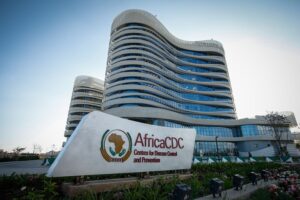
Health cooperation has deepened through the creation of the Africa Centres for Disease Control and Prevention and the African Medicines Agency, which help strengthen public health systems and reduce dependence on external actors. Lessons from the COVID-19 pandemic have pushed African nations to invest more in regional vaccine production and supply-chain capacity. In South Africa and Senegal, new facilities are already being built to produce mRNA vaccines, while countries like Egypt and Rwanda are expanding biomedical research and diagnostics.
The African Development Bank and the United Nations Economic Commission for Africa report that growth across the continent averaged around 4% between 2014 and 2019. Though below the ambitious targets of Agenda 2063, this performance reflected steady resilience before the pandemic disrupted progress. Poverty rates declined slightly, while youth entrepreneurship and digital startups multiplied in cities like Nairobi, Lagos, and Kigali. In most countries in Africa, mobile technology is reshaping commerce, with fintech platforms like M-Pesa and Flutterwave providing millions of people with access to credit, savings, and payments.
Still, challenges persist. Industrial transformation remains slow, as most exports are still dominated by unprocessed raw materials. Conflict continues to threaten parts of the Sahel, Sudan, and eastern Congo. Political instability, governance deficits, and corruption have also undermined collective efforts. Funding gaps limit how fast the agenda can move, as many projects depend on external financing. Climate change adds another layer of uncertainty, drying farmlands and displacing communities, especially in the Horn of Africa. Yet these limitations have not erased the growing momentum of African-driven initiatives.
The next phase of Agenda 2063, the Second Ten-Year Implementation Plan running from 2024 to 2033, is shifting attention toward industrialization, digital transformation, and climate resilience. It calls for stronger institutions, better coordination between governments and private sectors, and homegrown innovation. Many African governments are already embedding these principles into their national development plans. The African Union has also introduced a performance-tracking dashboard to monitor progress across all member states, ensuring accountability and consistency.
Senegal’s President Macky Sall, during his term as AU Chairperson, emphasized that Agenda 2063 was not only a vision but a contract with the African people. Sall challenged the African countries to move with purpose towards the goal.
Agenda 2063 remains a living vision even in the wake of financial constraints. The progress witnessed in factories powered by clean energy, the insurgence of youth-led innovations, and the surge of women in leadership reflect a continent on the move. Africa’s journey toward 2063 may be uneven, but its direction is unmistakably forward. The challenge for the next generation of African leaders is to sustain this momentum, turn policy promises into tangible results, and prove that the dream conceived in Addis Ababa in 2013 was not a mere rhetoric but a continental rebirth in motion.
This story has been featured in the just-launched Luminate Africa Journal, the first edition of The Africa Feature Network’s end-year magazine, and can be downloaded from the journal page.