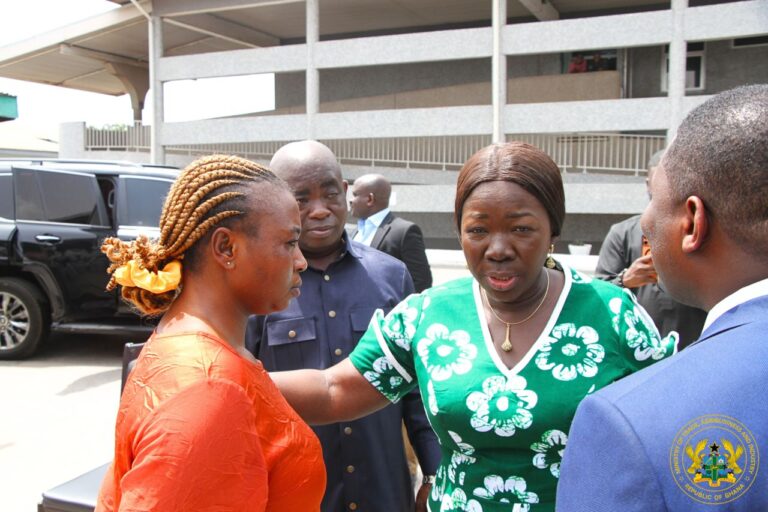
The Sahel region has become the epicentre of global terrorism because of rising insecurity and violent extremism driven by religious, social and economic factors.
In Burkina Faso, the deteriorating security situation displaced more than fifteen thousand people, many of whom sought refuge in communities across Northern Ghana. This reality created an urgent need to strengthen the capacity of vulnerable and at-risk populations in three border communities to prevent and counter radicalization and violent extremism.
In 2024, STAR-Ghana Foundation, with funding from the Global Community Engagement and Resilience Fund (GCERF) Emergency Programme, implemented the Building Resilience Against Violent Extremism (BRAVE) Project in three communities: Sapeliga in the Bawku West District and Garu in the Garu District all in the Upper East Region. The third community is Fielmou in the Sissala West District of the Upper West Region.
The BRAVE Project aimed to expand access to livelihood opportunities and entrepreneurship skills for vulnerable host and refugee women. It also sought to increase awareness among at-risk youth aged fifteen to thirty five on the drivers of radicalization within both host and refugee communities.
The BRAVE Project in affected regions
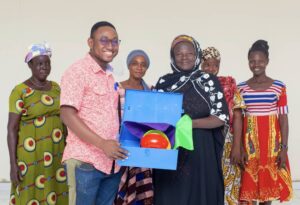
One of the major achievements of the project was the economic empowerment of two hundred and two women. They improved their economic abilities and gained access to income-generating activities through livelihood skills training, business start-up assistance and support in accessing markets.
The project also contributed significantly to youth resilience to online radicalization. Four hundred and sixty five young people, both host and refugee, reduced their vulnerability through training in digital literacy, critical thinking, the formation of digital literacy clubs and community sensitization efforts.
The project strengthened social cohesion across the three target communities, building trust and stronger relationships between host members and those who had fled from neighbouring countries.
The women received livelihood training in five trade areas: rice parboiling, weaving, breadmaking, soapmaking and shea processing. This took place over eight months, from April to November 2024. A Village Savings and Loan Association model was introduced in all three communities, supported by a revolving fund scheme to help women set up and sustain their enterprises beyond the project’s timeline.
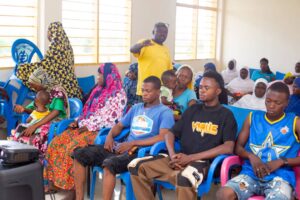
The four hundred and sixty five youth participants were engaged through community-based clubs and trained to recognize and manage information disorder, including misinformation, disinformation and malinformation. They also learned critical thinking, fact-checking, cyberbullying prevention, digital etiquette and responsible online behaviour.
These young people later led community sensitization work on preventing radicalization and violent extremism. Ahead of Ghana’s 2024 General Election, they creatively used new media to launch a social media campaign encouraging peaceful elections.
Growth and success of Brave Project
The success of this phase led to the expansion of the project into seven additional communities including Gwollu, Kasaapuori, Kupulima and Katini in the Upper West Region, as well as Bansi, Mandago and Nwaare in the Upper East Region.
The Project has contributed to building a sustainable model for peace and security by strengthening community resilience, economically and socially empowering vulnerable women and equipping youth with the digital literacy skills needed to resist radicalization and recruitment into violent extremism.
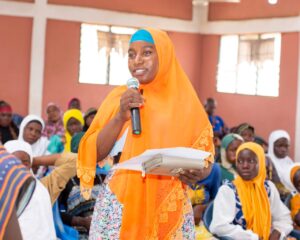
Community-based programmes that combine livelihood opportunities, awareness activities and dialogue effectively reduce drivers of extremism and strengthen local peacebuilding efforts.
Christina Kyebulang from Fielmou notes that extremists often target unemployed people, and the project reduced this vulnerability in her community.
Ajara Osman, one of the livelihood beneficiaries, says that learning breadmaking has enabled her to meet her basic needs, support her children’s education and feed her family. She has also begun training other women.
Another beneficiary, Anas Nasratufrom, explains that the lack of viable economic activity had caused significant psychological stress, but the intervention provided skills in soapmaking, baking and oil extraction, which eased that burden.
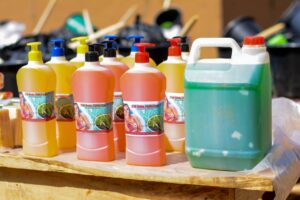
“There has been a surge in cases of psychological stress as a result of lack of viable economic activity. I’m glad that the intervention is now bridging this gap through skills.” Anas noted.
Enhancing digital literacy and critical thinking among at-risk youth significantly reduces their susceptibility to extremist narratives. Gafaru Alhassan from Garu shared that he no longer forwards information without verifying it from credible sources. Felix from the Fielmou Digital Skills Club described how he debunked a WhatsApp video by analyzing the vegetation and realizing it was not filmed in Ghana.
Community-level factors such as trust, cohesion and shared values contributed to improved resilience. One woman recalled the fear and anxiety they experienced when refugees from Burkina Faso first arrived. Concerns about safety and the possibility of extremists entering the community created tension. Through the project’s dialogue meetings, this fear faded, host and refugee families now consider themselves one community.
A refugee beneficiary added that being included in the project helped build mutual trust and made both groups feel comfortable living and working together. She expressed gratitude to STAR-Ghana Foundation for this transformation.
This story was featured in the just-launched Luminate Africa Journal first edition of The Africa Feature Network’s end-year magazine, and can be downloaded on our website at the Journal page.