Farming in many parts of the world, Africa included, has for decades largely been driven by income generation, with animal rearing primarily serving as a source of food.
In parts of Eastern Africa, however, cattle keeping has also been closely tied to royalty, with many farmers embracing particular breeds not only for their productivity but also for their striking beauty.
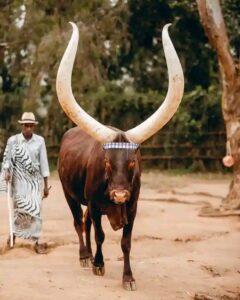
This story takes us to the Republic of Rwanda, one of Africa’s fastest-growing nations, where the art of cattle rearing reveals a remarkable tradition centred on one of the region’s most distinctive breeds, the famed Inyambo.
The word Inyambo originates from the Kinyarwanda language spoken in Rwanda. In traditional usage, the term refers to a special category of long-horned cattle associated with prestige and honour within the royal court. The name reflects the cultural status attached to these animals in Rwanda’s historical pastoral society.
The Inyambo belong to a broader group of long-horned cattle known as the Ankole cattle family. Within this group, several ecotypes exist across the Great Lakes region of Africa. Inyambo cattle form one of these ecotypes and are primarily associated with Rwanda, with smaller populations also found in parts of northern Burundi. Other ecotypes of the Ankole group include Kigezi cattle of southwestern Uganda, Bahima cattle, also known as Nsagalla, raised in western Uganda and parts of Rwanda and northern Tanzania, Ntuuku cattle of the Albertine Rift Valley in Uganda, Bashi cattle found in the eastern regions of the Democratic Republic of Congo, and the Ankole-Watusi cattle that have even spread to countries outside Africa, including the United States.
These cattle are part of a long historical movement of livestock across Africa. Scholars suggest that the ancestors of the Ankole long-horned cattle evolved in the region that is now Ethiopia. Several centuries ago, pastoral communities moved southward with their livestock into present-day East Africa. Oral traditions within the Great Lakes region link the spread of these cattle to the movement of groups associated with the legendary Bachwezi, figures often described in regional mythology as powerful rulers or semi-divine leaders who played a central role in early state formation.
As pastoral communities settled across the region, cattle breeding gradually produced distinct ecotypes adapted to local conditions. Among these, the Inyambo emerged as one of the most highly prized. Historical accounts describe how these cattle were carefully selected and bred for royal rulers within territories that later formed part of the Rwanda–Urundi kingdom.
The physical appearance of the Inyambo immediately sets them apart. Their horns stretch outward before rising upward in broad, sweeping curves that can span several feet from tip to tip. The horns are often symmetrical and striking in form, giving the animals a majestic appearance rarely seen among cattle breeds. Their bodies are tall and well-proportioned, and they move with a slow, calm presence that reinforces their distinctive status.
In Rwanda’s pastoral culture, cattle remain central to social and economic life. Milk forms an important part of daily nutrition in many households, particularly in rural communities. Livestock ownership continues to represent stability and prosperity, with families often measuring wealth through the size and health of their herds.
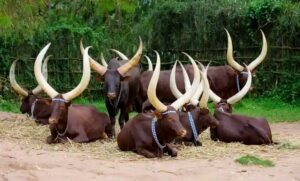
Within this broader cattle culture, the Inyambo represent prestige. Their value lies not only in their appearance but also in their cultural symbolism. These cattle have historically been associated with leadership, dignity and social standing.
Herders responsible for caring for the Inyambo maintain traditions that have been preserved through generations. One of the most distinctive practices involves singing to the cattle. Cowherders guide the animals using rhythmic chants and melodic calls, addressing individual cattle by name. The animals recognise the voices of their handlers and respond by moving gradually toward the singers.
The practice reflects a close relationship between humans and livestock within Rwanda’s pastoral communities. The songs help guide the herd while maintaining a tradition that has become part of the cultural identity surrounding the Inyambo.
Long-horned cattle are not limited to Rwanda alone. The pastoral traditions of the Great Lakes region connect several countries through shared livestock heritage. Similar cattle graze widely across neighbouring Uganda, particularly in the southwestern region historically known as Ankole.
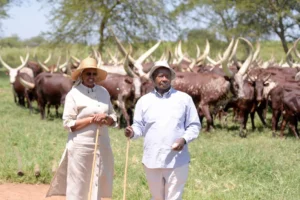
In this region, the cattle are commonly referred to as Ankole cattle. They share many physical characteristics with Rwanda’s Inyambo, most notably the wide and prominent horns that define their appearance. For generations, pastoral communities in Ankole have relied on these cattle as a source of livelihood, social identity and cultural continuity.
Herds of long-horned cattle form an important part of the landscape in western Uganda. Among pastoral groups such as the Bahima, cattle represent wealth and social status. The animals play a key role in cultural practices, particularly during marriage negotiations where livestock are offered as part of bride price arrangements.
The presence of similar cattle in Rwanda and Uganda reflects centuries of interaction between pastoral communities in the Great Lakes region. Livestock moved across territories through trade, seasonal migration and social exchange long before modern national borders were established.
Despite their cultural importance, indigenous cattle breeds across Africa face increasing pressure. Modern livestock systems often favour commercial breeds that produce larger quantities of milk or meat. As a result, many traditional breeds have declined in number.
Africa is home to more than 150 indigenous cattle breeds, many of which possess valuable genetic traits. These include natural resistance to certain tropical diseases, strong tolerance to heat and drought, and the ability to survive on low-quality forage. Such traits allow these animals to adapt to environments where commercial breeds often struggle.
For pastoral communities, indigenous cattle continue to provide a range of services. Beyond milk and meat, they supply hides, manure for agriculture and, in some regions, draft power for farming activities. Their resilience makes them especially valuable in areas facing environmental challenges.
The Inyambo represent one of the most culturally significant examples of these indigenous breeds. Their association with Rwanda’s historical monarchy gives them a symbolic status that extends beyond agriculture.
Efforts to preserve the breed can be seen at the King’s Palace Museum in Nyanza in southern Rwanda. Within the royal enclosure known as Urukari, a herd of decorated Inyambo cattle is maintained as part of the country’s cultural heritage. Cowherders care for the animals using traditional methods that reflect practices once associated with the royal court.
Tourists visiting the palace often gather to watch the cattle as they move slowly across the grounds, their long horns rising prominently above their heads. The sight provides a glimpse into a pastoral tradition that continues to shape Rwanda’s cultural identity.
Preserving the Inyambo is not only a matter of cultural pride but also an important step in protecting indigenous livestock genetics.
As agricultural systems continue to evolve, maintaining traditional breeds helps ensure that valuable genetic traits remain available for future livestock development.
Within Rwanda’s national identity, the Inyambo remain a powerful cultural symbol. Their distinctive horns, calm presence and historical association with royalty reflect a pastoral heritage that continues to influence society.
In Rwanda and neighbouring regions of Uganda and Burundi, long-horned cattle continue to graze under the care of herders who recognise their value beyond agriculture.