
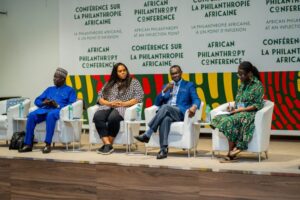
Panelists during the 5th African Philanthropy |Photo courtesy|
The global development landscape is undergoing a profound transformation as traditional sources of development assistance evolve and, in some cases, contract. Among the most significant shifts has been the gradual recalibration of programs associated with the United States Agency for International Development (USAID), a development agency that for decades has been one of the largest bilateral donors supporting humanitarian relief, public health, agriculture, and democratic governance initiatives across the developing world.
For many countries—particularly across Africa—the reduction or restructuring of large-scale development assistance programs has raised urgent questions about how essential services and social investments will be sustained. While governments and multilateral institutions continue to play central roles, a growing body of evidence suggests that philanthropy is increasingly emerging as a complementary force helping to fill gaps in funding and innovation.
Recent data from the Chronicle of Philanthropy underscores the scale of private giving that is reshaping the global philanthropic landscape. According to the organization’s widely cited Philanthropy 50 ranking, the 50 largest donors in the United States collectively contributed $22.4 billion to charitable causes in 2025, signaling the growing power of private wealth in shaping development priorities.
At the top of the list for the third consecutive year is billionaire philanthropist Michael Bloomberg, founder of Bloomberg L.P. and former mayor of New York City. Bloomberg donated $4.3 billion in 2025, directing funds toward initiatives in public health, environmental protection, education, the arts, and programs aimed at strengthening municipal governance.
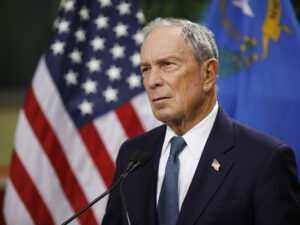
Bloomberg’s continued leadership on the donor list illustrates a broader shift within global philanthropy. Increasingly, large-scale philanthropic giving is being directed not only toward humanitarian relief but also toward structural investments that support systems change—areas traditionally dominated by government or multilateral development funding.
The changing role of philanthropy
The influence of philanthropic capital in global development has grown steadily over the past two decades. Large private foundations and wealthy individuals now play prominent roles in areas such as disease control, climate action, and education reform.
For example, technology entrepreneur and philanthropist Bill Gates contributed $3.7 billion in 2025 to the Bill & Melinda Gates Foundation, one of the world’s largest private charitable organizations. The foundation’s work spans vaccination programs, agricultural innovation, health system strengthening, and poverty reduction across dozens of countries.
Similarly, investor Warren Buffett donated $1.3 billion to several family foundations supporting a wide array of causes, while the late technology pioneer Paul Allen left a $3.1 billion bequest to establish a foundation focused on science and technology research.
The distribution of wealth among donors reveals an important pattern in modern philanthropy. The financial sector accounts for the largest share of major donors, with 20 philanthropists collectively contributing $4.1 billion, according to the Philanthropy 50 data. Technology entrepreneurs follow closely, with 12 donors contributing approximately $10 billion.
These figures demonstrate how the rise of new industries—particularly technology and finance—has also reshaped the philanthropic landscape, producing a generation of wealthy individuals capable of mobilizing vast resources for social causes.
Yet while these global contributions are substantial, the implications are particularly significant for Africa, where philanthropic investment is increasingly viewed as a critical pillar supporting development efforts.
Africa’s growing philanthropic ecosystem
Around the African continent, philanthropy has evolved from informal traditions of community giving into a structured ecosystem that includes foundations, corporate donors, and high-net-worth individuals.
For decades, development financing in Africa relied heavily on bilateral aid from Western governments and international financial institutions. Programs funded by organizations such as USAID helped support health initiatives, agricultural productivity, and governance reforms.
However, as donor priorities shift and global economic pressures mount, African leaders and development experts are increasingly emphasizing the importance of domestic resource mobilization and homegrown philanthropy.
The trend is visible in the growing number of African billionaires and entrepreneurs committing large portions of their wealth to social causes.
One of the most prominent examples is Nigerian industrialist Aliko Dangote, founder of the Dangote Group and one of Africa’s richest individuals. Through the Aliko Dangote Foundation, Dangote announced a ₦100 billion annual pledge for 10 years to support education initiatives in Nigeria.
The commitment—equivalent to roughly $688 million annually—represents one of the largest philanthropic education investments in Africa. The program aims to fund scholarships, strengthen academic institutions, and support broader human capital development.

Analysts say such long-term commitments reflect a growing understanding among African philanthropists that sustainable development requires investment in people and institutions.
Similarly, Nigerian businesswoman Folorunso Alakija backed a $23 million healthcare initiative connected to Osun State University, supporting the development of a specialist teaching hospital designed to train medical professionals and expand health care access.
Another influential figure in Africa’s philanthropic space is entrepreneur Tony Elumelu, whose Tony Elumelu Foundation has become a major supporter of African entrepreneurship. In 2025 alone, the foundation invested $15 million in grants and mentorship programs for entrepreneurs, providing seed capital to thousands of young business founders across the continent.
Elumelu’s approach reflects a growing emphasis on entrepreneurship philanthropy—a model that seeks to stimulate economic growth by supporting job creators rather than relying solely on direct aid.
Expanding sectors of giving
Beyond entrepreneurship and education, African philanthropy is increasingly supporting a wide range of sectors including health care, environmental conservation, and sports development.
South African billionaire Patrice Motsepe committed $10 million to youth football and school infrastructure linked to the CAF African Schools Football Championship. The initiative uses sports as a platform for youth development while also investing in school facilities.

Environmental philanthropy is also gaining prominence. Technology entrepreneur Mark Shuttleworth contributed $1 million toward conservation initiatives, including the Mouse Free Marion Project aimed at protecting seabird populations near South Africa.
In Egypt, the Sawiris family donated $30 million to support higher education programs at the American University in Cairo, funding scholarships, research initiatives, and international academic exchange.
These contributions demonstrate how philanthropy is becoming an increasingly diversified funding source supporting multiple aspects of development across Africa.
Relationships at the center of philanthropy
Experts say one of the defining characteristics of modern philanthropy is the emphasis on long-term relationships between donors and organizations.
Research by the Chronicle of Philanthropy indicates that more than 35 of the 51 donors appearing on its latest ranking maintained relationships with recipient organizations for five to ten years or longer.
Jeff Schreifels, a fundraising consultant with the Veritus Group, says this trend reflects a deeper shift in how philanthropy operates.
Rather than simply writing checks, donors increasingly seek partnerships with organizations that align with their personal values and strategic priorities.
“It’s about building relationships,” Schreifels said in commentary accompanying the report. “It’s being that bridge between the donor and their desire to change the world and matching that up with everything that the nonprofit does.”
For many philanthropists, personal experiences also shape their giving priorities.
For instance, philanthropists Jon and Mindy Gray have focused much of their charitable giving on cancer research following the death of Mindy Gray’s sister from ovarian cancer related to BRCA mutations.
Their philanthropic initiatives also include scholarships for students in New York City to attend historically Black colleges and universities, illustrating how personal motivations can translate into targeted social investments.
Stepping into the development gaps
As development financing evolves, philanthropy is increasingly seen as a flexible tool capable of addressing gaps that government aid programs may not fully cover.
Unlike government funding, which often comes with strict policy frameworks and diplomatic considerations, philanthropic capital can be deployed more quickly and innovatively.
This flexibility allows philanthropists to support experimental solutions, early-stage innovations, and grassroots initiatives that might struggle to secure traditional funding.
For Africa, where development challenges remain complex and multifaceted, the rise of domestic philanthropy represents a significant opportunity.
African philanthropists can help reduce dependence on external aid while strengthening locally driven solutions by mobilizing resources within the continent.
At the same time, international philanthropic institutions continue to play important roles in supporting major global initiatives such as disease eradication, climate resilience, and education reform.
What is the future of philanthropic leadership?
Despite the billions of dollars donated each year, analysts note that only a small fraction of wealthy individuals engage in philanthropy at the scale seen among top donors.
According to the Philanthropy 50 data, only 19 of the richest Americans listed in the Forbes 400 donated enough in 2025 to appear on the ranking.
Some prominent philanthropists are also absent from the list despite their large cumulative contributions. Author and philanthropist MacKenzie Scott, for example, has donated approximately $26 billion to charities since 2020, though the exact scale of her recent contributions remains undisclosed.
Scott’s approach—characterized by unrestricted grants and rapid distribution of funds—has influenced new conversations about how philanthropy can operate more equitably and effectively.
A new era of development finance
Taken together, these developments suggest that the global philanthropic sector is entering a new era in which private wealth plays a growing role in addressing societal challenges.
While philanthropy alone cannot replace government development assistance, its capacity to mobilize resources, encourage innovation, and support long-term partnerships makes it an increasingly important component of the global development ecosystem.
For Africa in particular, the rise of domestic philanthropists signals a shift toward homegrown solutions and regional leadership in development financing.
As billionaire donors and foundations continue to expand their investments in areas like education, healthcare, entrepreneurship, and environmental protection, philanthropy may prove to be one of the most dynamic forces shaping the continent’s development trajectory in the years ahead.


