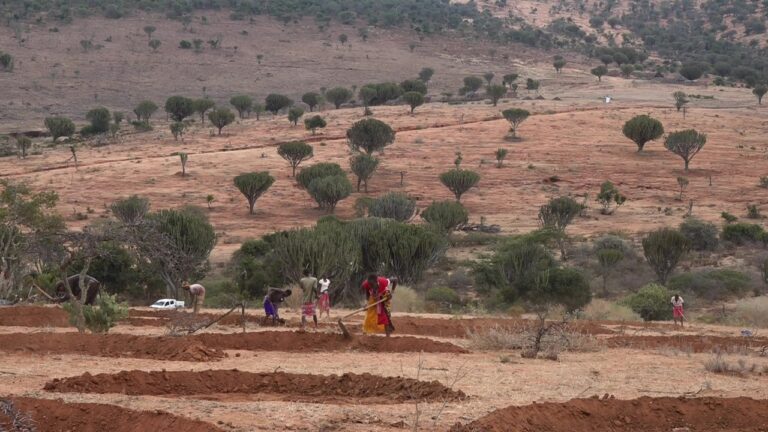
For generations, water scarcity shaped the history of a Kenyan community residing in South Sakwa, Awendo, Migori County. It dates back to the pre-colonial period when the Luo community, alongside the Oyani Maasai, were involved in a scramble for water for their livestock with their Kalenjin neighbours.
“The Luos often lacked sufficient water sources, forcing them to cross into Kalenjin territory in search of pasture and water. These movements frequently sparked conflict, leading to livestock losses and, at times, loss of lives,” recalls Moses Ojola, a community member of Mahena Village in South Sakwa, Migori County.
According to Ojola, the struggle for water access defined relations between the communities and exposed the region’s long-standing vulnerability to drought and water scarcity. The tensions escalated over time, forcing the colonial administration to intervene as the situation became dire.
In 1952, a decade before Kenya gained independence from the British, the Luo community was asked to provide land for the construction of a dam. The move was intended to resolve the prolonged conflict between neighbouring communities.
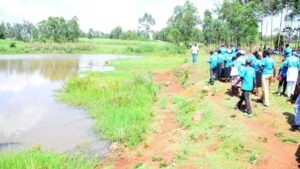
The colonial government sank the dam to reduce water-related conflicts and provide a shared water source for domestic and livestock use. It was named Mahena Dam. For years, the dam served as a symbol of peace and survival.
Although inter-community conflict reduced after independence, demand for water increased due to population growth, which heavily relied on the dam for farming and livestock. Over its 75 years of existence, the dam’s state has gradually deteriorated.
The reduced water had a negative impact on livestock and villagers who solely relied on the dam. What was once a lifeline turned into a shallow basin, infested with reeds. The surroundings also became a security threat, with reported cases of attacks, as the dam provided a safe haven for criminals. Water shortage contributed to widespread economic challenges.
Recognizing the growing need, the Mahena community, through the Mahena Dam Community-Based Organization (CBO), which began as a self-help group three years ago, formally requested support from Shining Hope for Communities (SHOFCO) to rehabilitate the dam.
According to Enock Obare, Secretary General of Mahena Dam CBO, the proposal focused on restoring the dam’s economic value.
“Our first proposal to SHOFCO was to rehabilitate the dam to revive the economic benefits it could bring, including water for domestic use,” said Obare.
“The objective was not only to restore water access but to transform the dam into a local economic engine”, he reiterated.
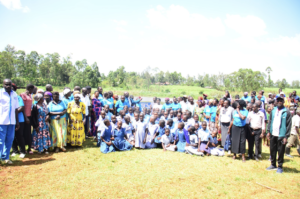
However, the initial request was rejected due to the high financial cost. Instead, SHOFCO resorted to sinking another dam a few meters from the original one, offering a cheaper option that could provide an immediate solution.
This, however, did not stop the community from submitting another request to have the Mahena Dam restored to its former glory. Eventually, after persistent advocacy, SHOFCO agreed.
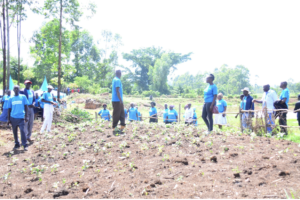
The organization embarked on a desilting project to increase the dam’s depth and restore its water retention capacity. Janel Nyaori, an official from SHOFCO, explained that the rehabilitation aligns with the organization’s Water, Sanitation and Hygiene (WASH) programmes, aimed at addressing health challenges affecting communities.
By rehabilitating Mahena Dam, she noted, WASH-related challenges such as water-borne diseases could be reduced while improving hygiene.
“By desilting the dam, we will establish a deep water level that will generate enough water for domestic use and enable the community to engage in water activities like fish farming,” said Nyaori.
For SHOFCO, the rehabilitation of Mahena Dam is part of a broader county-wide empowerment initiative.
In Migori County alone, SHOFCO has rehabilitated and desilted 20 water pans to address long-standing water challenges. The initiative covers all eight sub-counties, with Nyatike receiving a larger share due to land availability and its dry climatic conditions.
According to Mr George Okewa, the National Director of SHOFCO, restoring colonial-era dams like Mahena is helping communities regain reliable water sources.
“The rehabilitation of the Mahena Dam will restore a reliable water source for the community,” he said.
Okewa added that SHOFCO is partnering with the Migori County Government to stock rehabilitated water pans with fish fingerlings, promoting the blue economy and improving household income.
“We are partnering with the county so that they provide the community with fingerlings. This initiative encourages residents to explore commercial and agricultural uses of the restored dams, linking water access directly to the village to reduce poverty and enhance food security,” explained Okewa.
Beyond infrastructure rehabilitation, SHOFCO has been supporting the Mahena community through grants channelled via the Mahena Dam CBO.
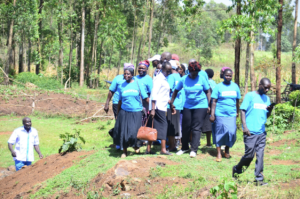
“Through the grants that we have been receiving from SHOFCO, we have been able to empower our girls and address issues of early marriages and teenage pregnancies,” said Obare.
Through the grants, the CBO has initiated empowerment programmes for members, supported students in Vocational Training Institutions, and assisted vulnerable children and orphans.
Obare added that the group is engaging SHOFCO to construct a resource centre to facilitate learning, research, and training in agriculture and entrepreneurship.
Duncan Odhiambo, a member of the South Sakwa Village Managers CBO, a body supported by SHOFCO, called for a continued empowerment of local CBOs to venture into agricultural enterprises such as maize, beans, and sugarcane farming to generate sustainable income.
Odhiambo noted that SHOFCO’s assistance has empowered various community-based organisations in the county and given hope to vulnerable and orphaned children to access basic education.
Ms Pamela Awuor, SHOFCO Youth Representative for South Sakwa Ward, disclosed that the organization awarded her a grant to start a cosmetic and salon business.
“Through SHOFCO, I have managed to open a small salon business in Awendo Town. I have also employed a fellow youth in my shop,” said Pamela.
“SHOFCO Youth Voice programme supports young mothers, pregnant teenagers, and youth living with HIV in addressing social and economic challenges”, reiterated Pamela.
Mahena villagers’ hope has been rekindled as they await a lasting solution to the dire socioeconomic state caused by water scarcity.