
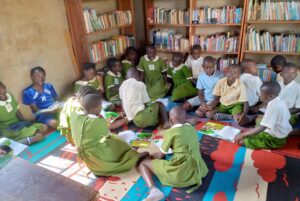
Pupils at the library built by Mukasa Foundation at Kasyamba village. Photo: Mukasa Foundation.
For decades, education has been a privilege for the haves in Uganda. The have-nots have long been subjected to menial duties not limited to tending to the needs of the haves. Despite the unfavourable odds, Geoffrey Mukasa charted his path to attain education and is now a ray of hope in the village.
In 2019, Geoffrey established the Mukasa Foundation to address the challenges underprivileged children face in accessing education.
Located in Kasyamba Village, Zirobwe Council in Luwero District, North of Uganda, Mukasa Foundation has created a huge socioeconomic impact. Targeting early childhood education, the less fortunate families have begun to appreciate Geoffrey’s impact.
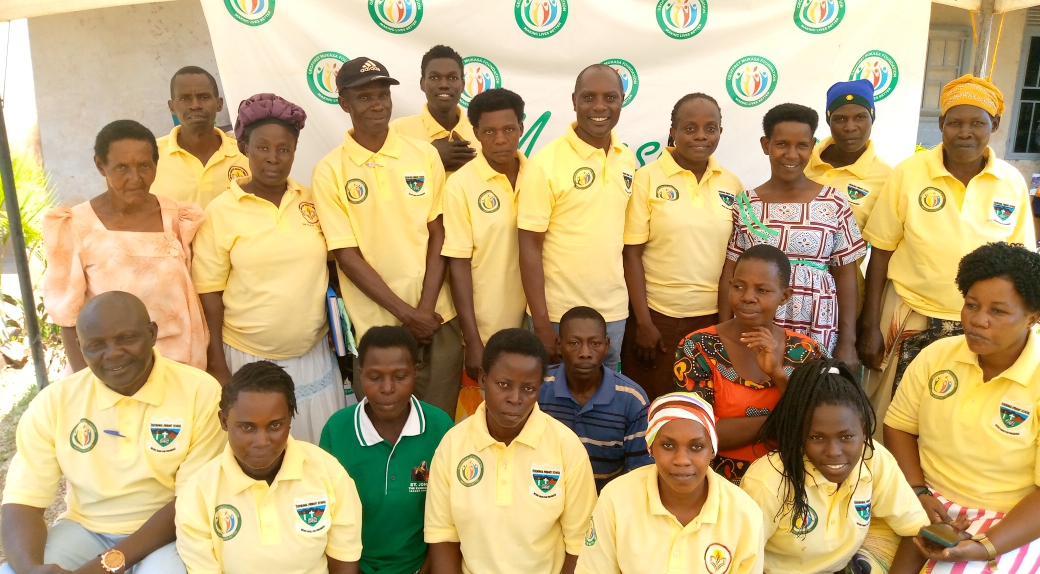
“Mukasa Foundation was started because of the recurrent socio-economic challenges of the society. We needed a change to turn things around from the usual and break the cycle,” Geoffrey Mukasa told Africa Feature Network.
Education is viewed as an equalizer and a measure of success in many countries. However, in Uganda, many children struggle to access it despite its clear stipulation in Uganda’s constitution. Article 30 guarantees all persons the right to education, with Article 34(2) further reinforcing the child’s right to basic education.
According to a report by the United Nations Children’s Fund (UNICEF) Uganda, the country still faces major challenges in providing quality and accessible basic education to children and adolescents.
UNICEF notes that access remains inequitable: The secondary level enrolment of the richest 20% of the population (43.1 per cent) is five times that of the poorest 20% (8.2 per cent). In terms of geographical distribution, the highest Secondary Net Enrolment is seen in Kampala (52 per cent) and the lowest in Acholi (7 per cent).
To suppress illiteracy levels and bridge the educational gap in Kasyamba Village, the foundation has involved the community in education-oriented investment, with their focus being on nursery, lower school and upper school.
“The Foundation currently operates a Nursery section of Baby, Middle and Top Class, a lower Primary of 1 to 3, and an upper Primary section of 4 and 5. On average, the number of pupils in the nursery section is 35 and 65 in the upper primary section,” said Kasyamba.
He added that the school is composed of vulnerable children from economically challenged families of Kasyamba.
Beginning operations in the post-COVID-19 crisis, Mukasa Foundation has remained a trusted bridge of education to vulnerable families. He says letting the community own the project has kept the foundation alive for six years.
Often in Africa, organizations own the projects with little inclusion of the community, hence the premature termination of operations.
Mukasa says that before any activity is rolled out to the villagers, it is tested. The created trust has sustained the Foundation as actions are tailored to the needs of the community.
“The communities that we operate in own all the projects, and with this approach of letting the communities own the project, it makes every project sustainable and impactful. Our approach is both theoretical and practical; the beneficiaries are within the community where Mukasa Foundation is found. Whatever approach we agree to roll out is tested and proven to be working or not, it is through practical implementation,” said Mukasa.
With the community owning the project, Mukasa Foundation operations have been running smoothly, expanding its humanitarian aid beyond education and adult learning.
In Kasyamba village, there is a community library with elementary, secondary, and vocational books on agriculture, offering lessons on modern agricultural practices, largely embraced by the community.
“The library serves as a resource centre for local students, teachers and the general community of Kasyamba. The community will become well-informed because people have access to a wealth of information. Agriculture is the backbone of Uganda’s economy, especially in rural areas. Books on modern farming techniques and sustainable agriculture will be made available to the farmers. We are eradicating illiteracy in our community as knowledge is power,” clarified Mukasa.
Mukasa Foundation is contributing to Uganda’s efforts towards Vision 2030, ensuring Sustainable Development Goal (SDG) Four: ensure that all youths and a substantial proportion of adults, both men and women, achieve literacy and numeracy. Literacy and numeracy skills, that is, reading, writing and calculating, are vital skills for individuals to further their learning and to develop throughout their lives independently.
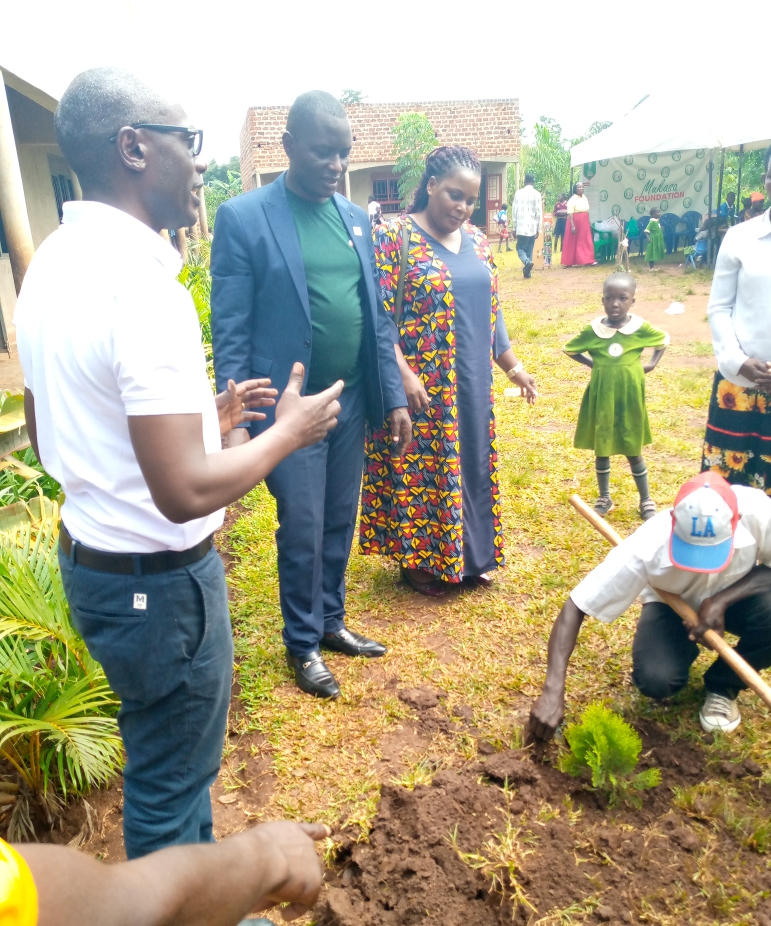
Mr Yasmin Ddumaba, a beneficiary of Mukasa Foundation adult learning program, now a successful fruit tree farmer, planted four fruit trees, two mango and two avocado trees. Ddumaba will start harvesting his fruits next year.
Avocado farmers in Africa are currently enjoying the market overseas. Ddumaba will now join the list of exporters from Kenya, Ethiopia, Malawi and South Africa, exporting tons of farm produce for good returns.
“Life is getting better every day ever since I joined Mukasa Foundation. I can now read and write. With the skills I will be able to handle the sales that come from the fruits, take care of my family, invest and expand my production. I now understand what is required to ensure my trees mature from the books we access in the library,” said Ddumaba.
Evidently, the benefits brought forth by Mukasa Foundation are felt beyond the classroom walls. The community has been empowered socially and economically, and the environment has been rehabilitated through tree planting. With the health benefits of fruits, fruit trees have also played a role in disease control.
“These fruits will be both commercial and domestic. This means that we have preserved the environment, provided health in the family and earned income, which is our goal as Mukasa Foundation,” stated Mukasa
Ddumaba’s five children study at Mukasa Foundation. Some learners here are rescued from working as labourers in rich neighbourhoods.
The African continent is currently battling the adverse effects of climate change, experiencing extreme long dry seasons and destructive long rains. Deaths and property damage have resulted from such severe weather patterns.
African nations have called on the public to plant trees. The climate change discourse has not left even the young generation behind.
As leaders champion inclusion in the climate space, climate financing and justice for the continent through the Conference of the Parties (COP) and other United Nations climate agencies, Mukasa Foundation has included climate action education in its program.
Complementing class narratives of climate change action, each pupil is given a tree to plant and nurture to maturity, which Mukasa says has been successful and is contributing towards an increase in Uganda’s forest cover.
“The success of our tree program has attracted many people who have replicated our program back in their countries. Ryan Okello Foundation from Kenya, using the same model, invited us to speak about our tree program at their Green Summit in Kitale, Kenya,” said Mukasa.
Ryan Okello Foundation is a youth-led Organisation that advances environmental sustainability, climate leadership, agricultural innovation and capacity-building for young changemakers on the continent.
Creating awareness on climate among children, Mukasa Foundation also works with Ms Climate Change Awareness Central Uganda Maria Maureen, the pioneer of biodegradable hair innovation as a sustainable substitute for plastic hair extensions.
The duo aims to empower communities with knowledge, practical skills, and sustainable solutions that contribute to long-term environmental protection.
“I participated in the restoration of the Lazarus Forest, encouraging community members to plant trees and understand their importance in restoring degraded landscapes and improving local ecosystems, and we have witnessed communities embrace this action, which they thought was too small,” said Maureen.
Additionally, together, they have been training the community on the dangers of land degradation and deforestation. The duo has emphasised proper land use, better soil conservation approaches and proper waste disposal.
“We have guided communities on simple, practical steps they can take to protect the environment, reduce vulnerability, and build climate resilience,” Maureen added.
While Mukasa Foundation contributes to socio-economic empowerment through tree planting for commercial purposes, quality education and climate action, like any Organisation, financial constraints have stalled expansion of its services.
Uganda’s flagship project, the Parish Development Model (PDM), was launched in 2022 to eradicate poverty. Other policies, such as free universal education and government-sponsored sensitisation programs, can equally play an integral role in suppressing poverty.
Geoffrey Mukasa believes collaborative efforts are key to achieving the goals of Vision 2030.
“We need partnerships and collaborations from well-established individuals and organizations that are operating in the same space, learning from each other and reviewing approaches. We need financial resources for financing different projects to achieve our vision,” said Mukasa.
The Foundation has partnered with various organizations within and beyond Ugandan borders, including Makerere University, Roofing Group (Forever Forestry), Ryan Okello Foundation from Kenya, Uganda Institute of Information and Communication Technology (UICT), among others.
Geoffrey Mukasa believes change can be realised if one is fully committed to bringing their desired change by putting their theoretical ideas into practice, as outcomes will always be noticeable in day-to-day living.
“Changing people’s lives is very possible as long as you practically do what you intend to do theoretically. The results are clearly seen. People’s lives keep changing every day, and you see it. The environment keeps changing every day, you see and observe it,” Geoffrey Mukasa said.
This story has been featured in the just launched Luminate Africa Journal, the first edition of the Africa Feature Network’s end year magazine, and can be downloaded from the journal page.


