
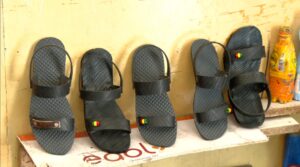
Finished pairs of traditional Akala Sandals are displayed at the Village Creatives. Photo: Eric Oundah.
Burning of tyres has been linked to long-term respiratory illnesses, cancer-related risks and widespread contamination of the food chain and groundwater. Often, worn-out tyres are openly burnt, which pollutes the air and the ecosystem.
According to Statista, global car sales reached approximately 74.6 million in 2024, a 2.3% increase from 2023. With a market share of 23 million cars, or 31%, China led total sales, followed by Japan, South Korea, North America, and the European Union, respectively.
As 1st World economies produce and buy new cars, African countries have been the largest importers of used cars. According to Market Data Forecast, the affordability of dependable models with low mileage has made nations like Ghana, Kenya, Tanzania and Nigeria become importation centres.
The United Nations Environment Programme (UNEP) released a report stating that 80% of vehicles imported into Sub-Saharan Africa in 2022 were used units. Most of these units are imported with worn-out spare parts, which are carelessly disposed of after a short use.
To fight environmental pollution tied to imported used vehicles, Kenya introduced a bill where vehicles more than 8 years from the year of first registration cannot be legally cleared at the port.
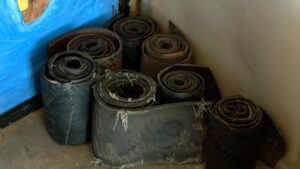
Despite the stringent policies enforced to curb environmental pollution, contributed by the motor vehicle industry, unsustainable and hazardous methods are still being used to dispose of worn-out parts, particularly tyres.
Globally, approximately 1.5 billion waste tyres are generated annually. A bigger percentage of these tyres are burnt. The combustion process releases hazardous gases such as Sulphur dioxide, nitrogen oxides, carbon monoxide and volatile organic compounds, which affect the air quality.
In Polyview estate, Kisumu County, Kenya, we meet Zack Owiso, a local who has mastered the art of sustainably crafting designer sandals, popularly known in the region as “Akala shoes”, from used tyres. Under his brand name, the village creative, Zack is on a journey to make a societal impact.
“We do a lot of crafts here, from drawing to carvings, modelling and so on”, says the jubilant Zack, who passionately explains how greatly the surroundings have been impacted since his business began.
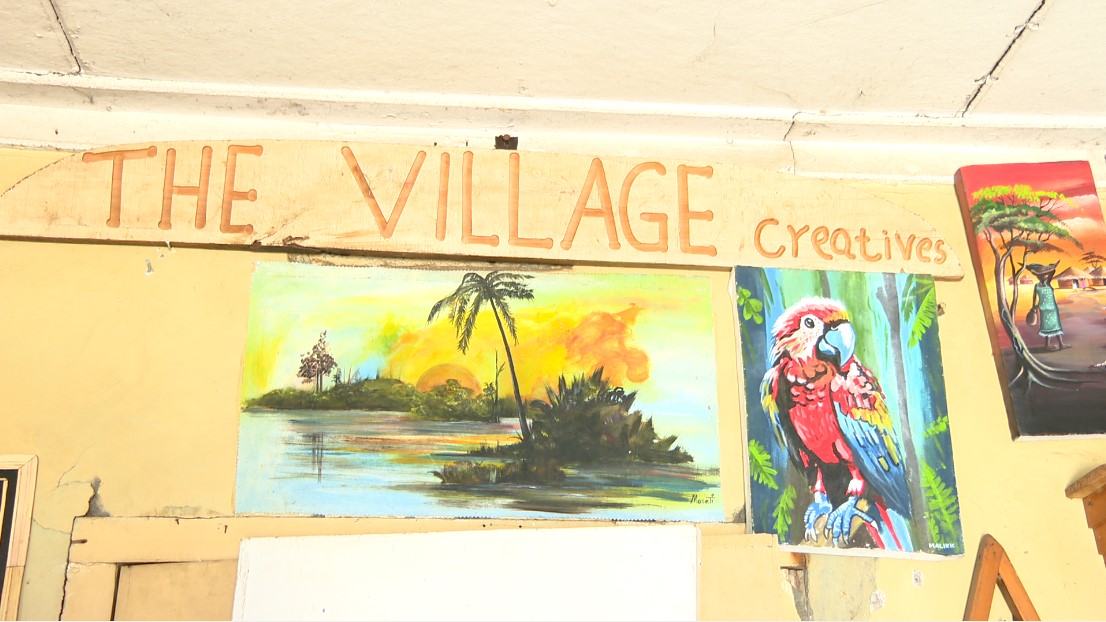
As 2025 marks Zack’s tenth year of turning waste into wealth, he reminisces about how his idea was born in the village, hence the brand name “Village Sandal”. Having never received any specialized training on shoemaking, Zack’s inherent artistry propelled him to greater heights of creativity.
“When I got into this business, I often made oversized sandals which were very uncomfortable. But over time, I have advanced to making fitting sizes which look neat and attractive”, says Zack.
At his small workshop in Ahero Junction, Zack designs a variety of sandals tailored to the intended work environment. As some footwears are beautified with beads of colours representing national flags, others are ruggedly built, extra-thick to withstand harsh terrains and unofficial work environments.
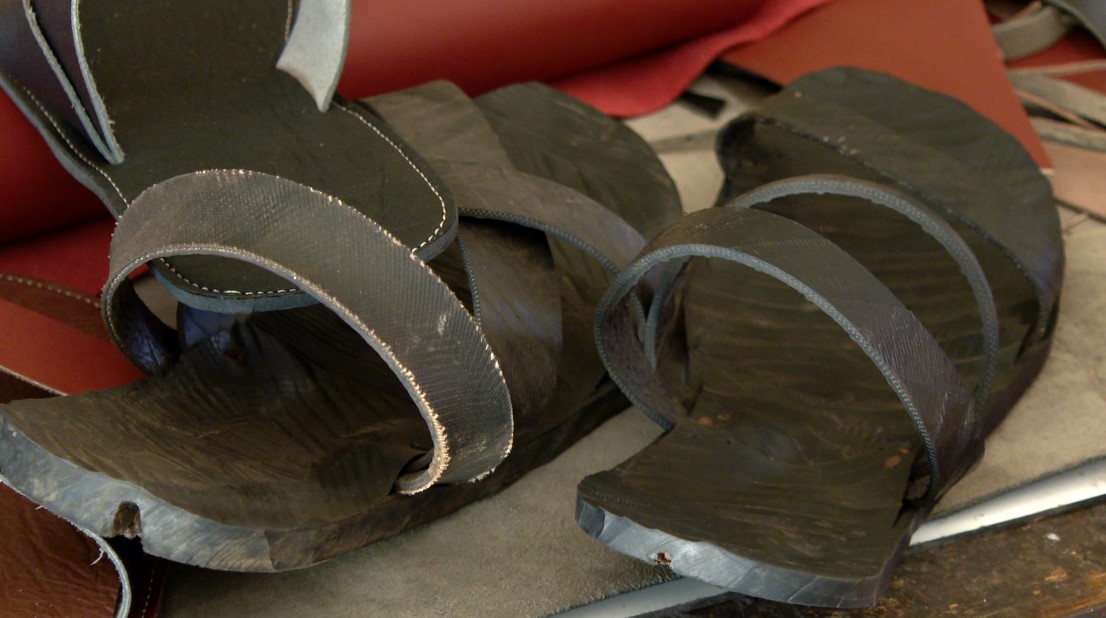
“These thick and strong sandals target those who do menial jobs, while these thin and beautifully designed ones are meant for special events and everyday wear because they are light”, says Zack.
Nonetheless, amidst the assorted footwear that Zack makes, his most conspicuous product is the traditional Akala shoe, whose raw materials are exclusively acquired from used tyres, if not for the beads that are sometimes used for aesthetics. The Akala sandals are affordable due to the readily available raw materials.
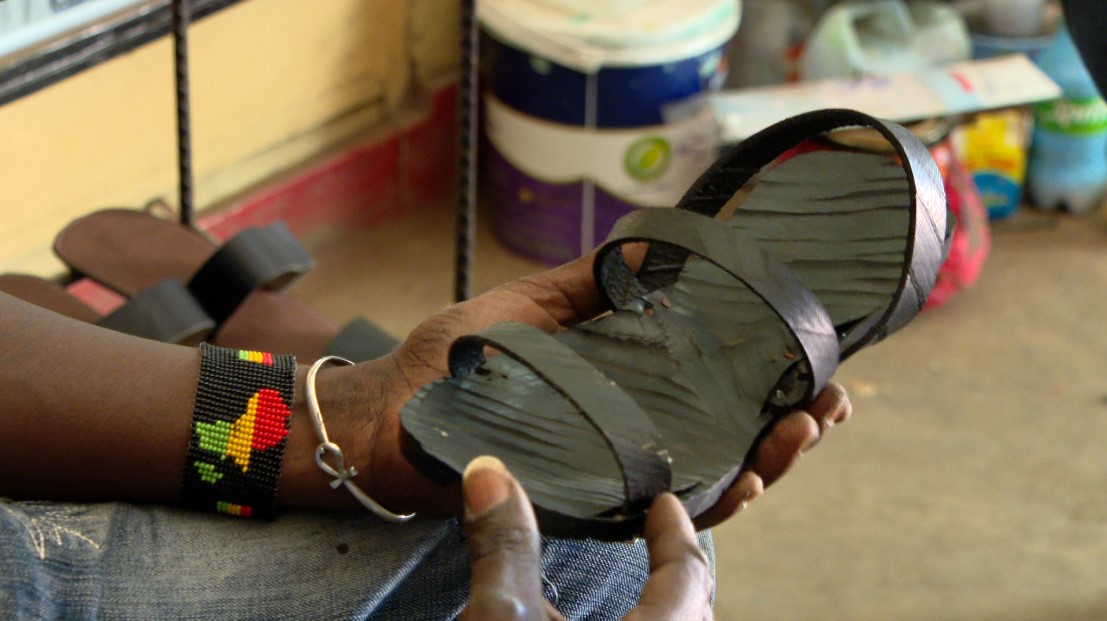
“The good thing with this Akala sandal is that from the same tyre we extract the sole, strap, and we only buy the small nails, which do not cost much”, says Zack, who contrasts that the modernized sandals are expensive and delicate as one has to buy leather, glue and part with a tailoring fee for joining the different parts of the shoes together.
It is an exercise which begins with the collection of used tyres. Every day, Zack visits “Jua kali” areas such as garages. It is from such places that he gets raw materials, the used tyres, at a subsidized cost.
“A worn-out tyre cannot be reused in a car. So, it will likely be burnt as waste which pollutes the environment, and that is basically what we are trying to avoid”, says Zack.
Amidst championing for a safe space for the living organisms, Zack’s skill has earned him a decent life. From this Akala shoemaking art, Zack has raised school fees for his two children, whom he says have never been sent out of school for fee-related reasons. Additionally, from his pocket, Zack comfortably affords for his parents, who live in the upcountry.
Regrettably, with opportunities come challenges. Zack’s creativity has been met with an enormous setback, which he fears could cripple his venture in the near future.
“Some people come to my workplace to copy my designs, which they take to other places where they are made in bulk and sold at lower prices”, says Zack, who reiterates that such unfair business practices adversely impact startups.
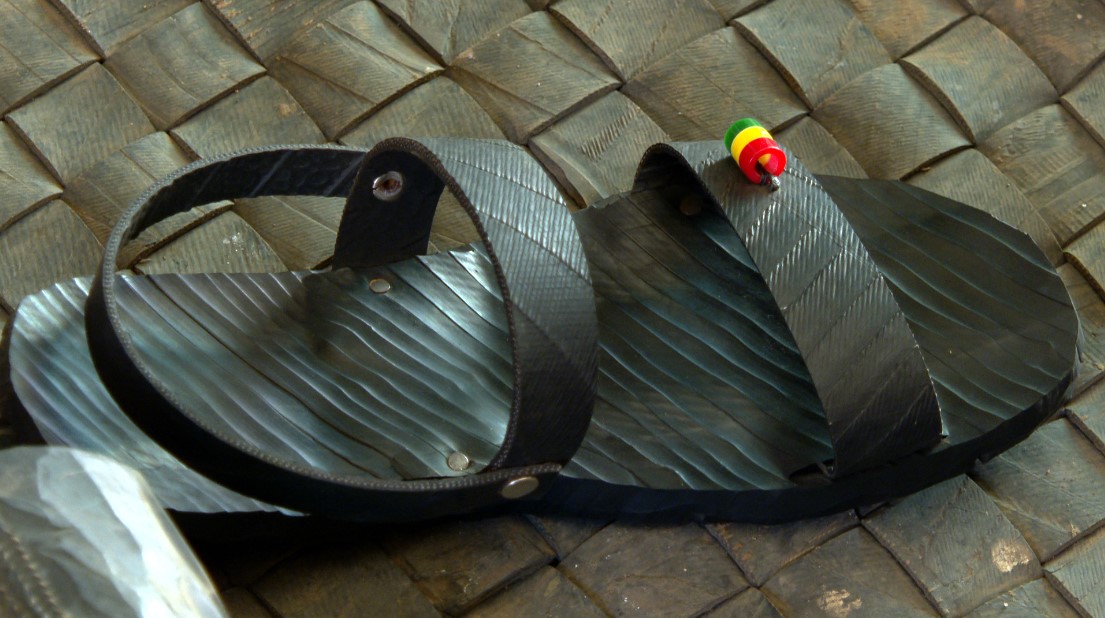
It is an industry that requires innovation. From creative paintings to Rastafarian beads and stylish straps, Zack’s Akala Sandal designs have gone through cycles of creativity. On special occasions such as the Reggae music extravaganza, fanatics throng his workshop to buy sandals designed with Rastafarian or Jamaican flag beads.
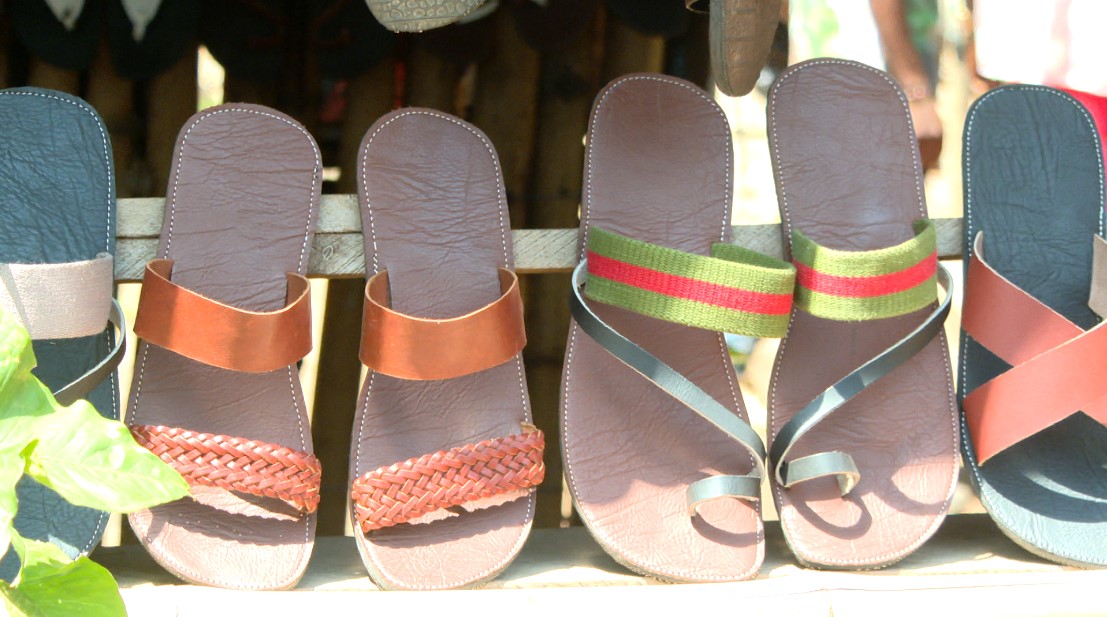
“There is also a Kenyan musician named Coster Ojwang, whose music touches on Luo traditions and cultural practices. At his concerts, fans wear these Akala shoes a lot”, says Zack.
Akala sandal, the footwear design which can be traced back to the olden days, is slowly being reintroduced into the market, and the reception is promising.
“It makes me feel good when people are receptive to the olden wears because we can make them locally”, says Zack, who urges that there is no need for Kenyans to import products from China while the same can be locally made.
With its unrivalled durability and cheap maintenance cost, Zack has urged the populace to embrace Akala shoes not only to promote his business but to take part in the sustainability campaign.
“Akala shoes do not wear out; the same shoes can be worn by generations. There is no special approach to its maintenance; you simply wash and air it in the sunlight,” says Zack.
With prices ranging from Kshs 400/=, both genders have embraced the village sandals. The prices are determined by the tedious process of cutting the used tyres to create a finished product, and the amount of time spent in fashioning a pair. With the aid of tools such as a chisel, scissors and a sharp knife, soles and straps are cut from a used tyre.
A worn-out tyre is cut and stretched on a flat table surface. Using a sole-shaped template, a drawing is made on the stretched tyre. Thereafter, a chisel or a scissor is used to cut the drawing mark that comes in the shape of a shoe sole. Afterwards, straps are cut from a thin-layered tyre. With the aid of a chisel, cuts are strategically made around the sole where straps are inserted before being hammered with tiny nails.
“A big-sized lorry tyre produces 12 Akala sandals, and if you multiply that by Kshs 400/=, that is the profit that you will get”, says Zack.
To make real his vision of zero tolerance to environmental pollution, Zack has a running training programme where his trainees are equipped with skills of recycling worn-out tyres into other useful items. Zack does this to empower youths and to dissuade them from environmentally unhygienic practices.
“I have trained so many youths who have become independent economically, and my only advice to youths is that skills will take you places. Don’t wait too long for white colour jobs”, says Zack
As the economy becomes unbearable to the masses and the job market shrinks, Zack has urged the youth that the future is in creating job opportunities, which is entirely dependent on inherent skills. Still, Zack has encouraged youths on startups that prioritize sustainability goals just like his Akala sandal idea.
“As youths, let us not overburden our parents. If you are over 18 years of age, find something to sustain you and your parent”, says Zack, who reiterates that Akala shoes, apart from saving the environment, reclaims the forgotten culture and impacts individuals economically.
With the wear and tear of car tyres happening every single day, there is a dire need for the populace to inculcate a sense of responsibility through safe disposal practices. Efforts such as Zack’s should be replicated to save the ecosystem from potential harms that come with burnt tyres.
This story has been featured in the just launched Luminate Africa Journal, the first edition of the Africa Feature Network’s end year magazine, and can be downloaded from the Journal page.


